An urban classist xenophobist socioeconomic commentary supernatural occult suspense thriller
One big reason I adore the films of the 1970s so much is that at no other time in the history of motion pictures can one find so many mainstream films that are just so off-the-chart, batshit crazy. For reasons both cultural and industry-related, it was a freer, more risk-taking time, resulting in a slew of exhilaratingly oddball feature films wholly deserving of the attribution, “Only in the '70s!”
 |
| Shirley MacLaine as Norah Benson |
 |
| Perry King as Joel Delaney |
 |
| Miriam Colon as Veronica |
 |
| Lovelady Powell as Erika Lorenz |
 |
| Edmundo Rivera Alvarez as Don Pedro |
 |
| Barbara Trentham as Sherry Talbot |
I first became aware of the occult thriller The Possession of Joel Delaney while walking on Market Street one Saturday in 1972 and being stopped in my tracks by the sight of this arresting poster staring out at me from out of a theater’s “Coming Soon” display case:
 |
| I still have this poster, which I purchased back in 1974 |
Not only was I seized by the eye-catching graphic and provocative tagline, but here was a genre film (I was very much into scary movies at the time) headlined by an Oscar-nominated, A-list actress whose name was commonly associated with light comedies, musicals, and the occasional serious drama. I was stoked!
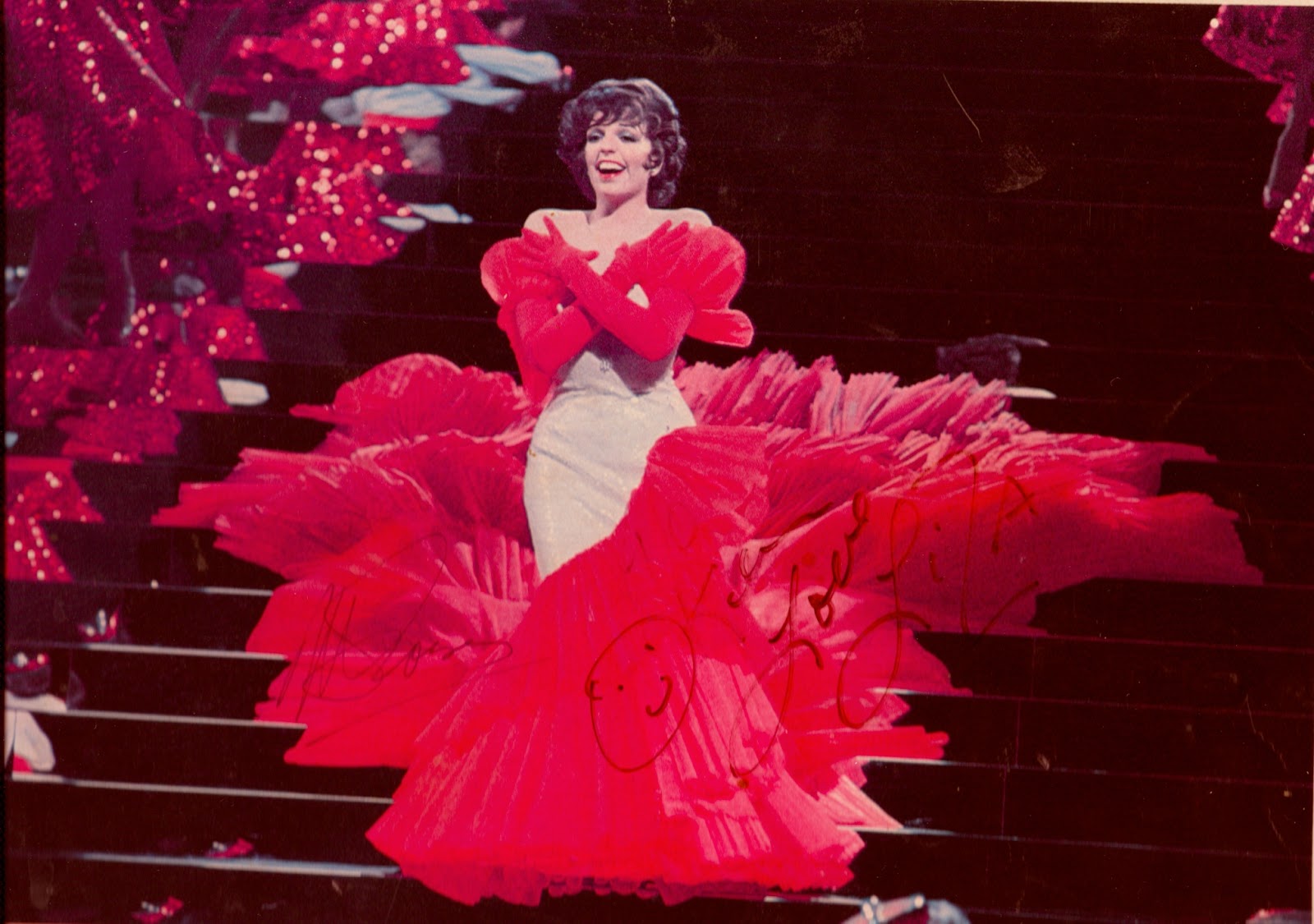
That indifference changed in 1969 when I fell in love with MacLaine in Sweet Charity, after which she became a lasting favorite. So much so that I subsequently made it my business to catch up with many of her earlier films on The Late Show, and even willingly subjected myself to her short-lived, fairly awful, 1971 TV series Shirley’s World.
 |
| Worlds Apart African tribal masks, divested of their spiritual and cultural significance, are mere decorative objects d'art in this swank Manhattan Penthouse |
So, when did I see The Possession of Joel Delaney? I didn’t.
That is to say, I didn’t get to see it when I really wanted to: when I was 14 years old, impressionable, and easily scared. When this darkly intense, exceptionally creepy little thriller could have really done a number on my head. No, when I finally got the opportunity to see The Possession of Joel Delaney, it was in the early 1980s at a revival theater. And happily, all that time hadn't prevented this unusual, atmospheric film from still packing quite a wallop.
What kept me from seeing this film in my teens was my still-existent habit of repeat-watching
movies I enjoy. 1972 saw the release of Cabaret,
The Godfather, What’s Up, Doc?, Lady Sings
the Blues, The Poseidon Adventure,
The Getaway, and Sleuth. All faves I saw numerous times, always telling myself I’d get around to seeing Shirley MacLaine’s film “Next weekend....”
Well, when a film performs as poorly at the boxoffice as did The Possession of Joel Delaney, “next weekend” is over before you know it. I snoozed, and I lost.
But the wait was worth it.
 Wealthy divorcee Norah Benson (MacLaine) lives an insular, privileged
life on Manhattan's Upper East Side, in the sizable apartment she shares with her two
pre-teen children, Peter and Carrie (David Elliot & Lisa Kohane). When
not lording despotically over Puerto Rican domestic, Veronica (Mariam Colon),
Norah dotes obsessively and possessively over her aimless younger brother, Joel
(King). Much to Norah’s chagrin, Joel, whose social principles are very much at
odds with those of his sister's sheltered apathy, has denounced the advantages of their family’s wealth.
Wealthy divorcee Norah Benson (MacLaine) lives an insular, privileged
life on Manhattan's Upper East Side, in the sizable apartment she shares with her two
pre-teen children, Peter and Carrie (David Elliot & Lisa Kohane). When
not lording despotically over Puerto Rican domestic, Veronica (Mariam Colon),
Norah dotes obsessively and possessively over her aimless younger brother, Joel
(King). Much to Norah’s chagrin, Joel, whose social principles are very much at
odds with those of his sister's sheltered apathy, has denounced the advantages of their family’s wealth.
But the wait was worth it.

Instead, he has chosen to live in a shabby apartment in the East Village, given to him by his friend, Tonio Perez. Tonio is a young man unknown to the somewhat snobbish Norah, and the fact that Norah would likely disapprove seems to factor a bit in Joel's attachment to him -“He’s just about the only close friend I ever had. He stands for everything Norah hates.”
After Joel suffers a violent episode that lands him in Bellevue (a physical assault he has no recollection of committing), Norah, suspecting
drug use, insists he move in with her (It’ll
be just like old times, Joel. We’ll have such fun together!”) and see family friend and psychiatrist, Ericka Lorenz (Lovelady Powell).
 |
| "Joel, why do you live down there with those people?" Norah's children listen in as Norah racistly obsesses over Joel's whereabouts |
While Norah’s almost incestuous preoccupation with her brother is appeased by their new living arrangement, Joel’s own behavior grows increasingly uncharacteristic and erratic. Dangerously so. He erupts in outbursts of Spanish profanities, afterward claiming he doesn't even speak the language. He grows possessive and sexually violent with his girlfriend, Sherry (Trentham), behaves inappropriately with his sister and nephews, and overall appears to be unduly influenced by his inexplicably close friendship with Perez. Not helping matters in the least is the fact that Perez is suspected by police to be involved in a rash of beheadings in Central Park.
 |
| Tonio Perez (Jose Fernandez) shares Joel's contempt for the upper classes. They also share a deep-rooted resentment of women they perceive to be dominating |
Without divulging more of the plot than the film’s own title affirms, suffice it to say that on the topic of
living arrangements, Joel’s body can be said to have become an involuntary sublet
to a particularly twisted homicidal maniac.
On the way to its tense, almost unwatchably disturbing climax,
The Possession of Joel Delaney reveals
itself to be a fairly riveting mix of suspense and social commentary.
Thoughtful and unsettling, it's both a worthy offspring of Rosemary’s Baby’s religion-as-cult urban horror and a fittingly grisly (albeit comparatively subdued) precursor to 1973's demonic-possession game-changer, The Exorcist.
 |
| Urban Jungle |
WHAT I LOVE ABOUT THIS FILM
In an earlier essay on the classic film Rosemary’s Baby, I observed that many of my favorite horror movies derive from or reflect the anxieties and tensions within their time. These films, serving as shrouded emotional outlets, allow for the
safe venting of fears hidden deep within the collective psyche. Fears that are usually rendered inaccessible
by virtue of their immediacy. Taking the position that all horror films are in some way socially revealing, The
Possession of Joel Delaney offers an ideal time-capsule glimpse into the urban race/class tensions of the 1970s.
From a humanist perspective, New York City during this time was a real-life horror story and something of a socio-economic nightmare. The city—destitute, decaying, dangerous under the weight of political, economic,
and racial tensions too labyrinthine to go into here—was on the brink of collapse.
 |
| Hispanic Panic Norah's excursion to Spanish Harlem results in a full-throttle attack of xenophobia |
While white flight, labor unions, and classism contributed to the wealth divide pitting the haves against the have-nots, the close confines of the city, coupled with the great disparity in the quality of life experienced by its populations based on race, fed urban fear amongst New York's privileged whites. Specifically regarding the city’s Puerto Rican population, which increased following “The Great Migration” of the '50s.
The squalor of '70s-era New York has played a role, both significant and superficial, in American movies as diverse as: Diary of a Mad Housewife (1970), The Out-of-Towners (1970), Little Murders (1970), The Panic in Needle Park (1971), Klute (1971), and MacLaine's own 1971 drama, Desperate Characters, which plays something like a prequel to this film. But The Possession of Joel Delaney (so gritty that Travis Bickle could have been the cinematographer) is the first film to put classist race-fear and the city’s socioeconomic divide in service of the horror genre.
 |
| In this film about spirit possession, Christian beliefs are replaced by the voodoo-like rituals of Puerto Rican Santeria. Norah finds her skepticism challenged in this harrowing exorcism scene |
PERFORMANCES
As probably everybody knows by now, author William Peter Blatty wrote the character of Chris MacNeil in his novel The Exorcist for and about his neighbor, Shirley MacLaine. Reagan was loosely based on MacLaine's daughter, Sachi (although, contrary to what her mother claims, Sachi denies that the blurry photo of a girl on the hardback cover is her). MacLaine was offered the opportunity to play herself in the film version, but, being as she was then under contract to Sir Lew Grade—producer of this film, her TV series, and Desperate Characters—she had to decline the role, which ultimately went to Ellen Burstyn and won her an Oscar nomination.
More's the pity, for if her performance in The Possession of Joel Delaney is any indication of what she would have delivered as Linda Blair's mom, she'd really have given the devil his due.
MacLaine is the emotional lynchpin in The Possession of Joel Delaney, and her performance here is one of my favorites. There's an art to playing an unsympathetic lead character, and MacLaine finds that narrow line between off-putting and compelling and walks it like a tightrope. She really is outstanding, and the film belongs to her. I especially like the ease with which she inhabits all sides of her character; the good, the bad, and the slightly icky.
 |
| Simpatico Siblings In his first major feature film role, Perry King, who at times resembles, alternately, Jodie Foster and Bridget Fonda, is fine when called upon to mercurially shift from nice guy to nut case. |
THE STUFF OF FANTASY
No matter how clever or provocative the framework upon which
the premise of a horror film is draped, the proof of any good thriller is whether it
works. And this one does. The Possession of Joel
Delaney is, to paraphrase Clifford Odets, a cookie full of arsenic and a vitriol valentine to urban class conflict. All balanced precariously between being the realization of a racist’s worst nightmare and a supernatural occult thriller.
Alas, it's a balance the film, for all its effectiveness as a spellbindingly
claustrophobic chiller, is not completely successful in maintaining.
 |
| Warhol star Pat Ast has a brief bit as a Bellevue patient appreciative of Norah's fur coat |
A movie fashioned as an indictment of classism and race-fear runs the same risk as a film designed to condemn sexism or violence against women: if not handled delicately, said film can wind up actually BEING the very thing it attempts to excoriate. For example, on its initial release, Bryan Forbes’ brilliant The Stepford Wives (1973) was misinterpreted as sexist, despite the entire thrust of the narrative being a send-up of the absurdity of sexism.
In spite of frequent attempts to present Norah's regressive, racist attitudes in the most negative light possible, The Possession of Joel Delaney is considered by many to be unappetizingly
racist in its depiction of Puerto Ricans as mysterious and inherently dangerous
“others.”
A valid point, but one I attribute more to flaws in direction than in the film itself. For the most part, the events of The Possession of Joel Delaney are seen from the perspective of Norah Benson, a character we know to be the worst kind of upper-class effete (To Joel: “Look, I’m not naïve. I know there’s poverty around, but one doesn’t have to seek it out. I don’t have to and you don’t have to either”).
 |
| The Possession of Joel Delaney would have benefited from more scenes like this one, where Norah seeks assistance from her maid, Veronica. The deferential domestic is revealed to be a self-assured woman, wise to the realities of class disparity. |
Had the film remained true to this initial setup and
presented events as unfolding exclusively from Norah’s narrow-minded
point of view, The Possession of Joel
Delaney, in my judgment, could have achieved what I think it set out to
do: to show that Norah’s fear and mistrust of Puerto Ricans is a barrier between her
fully comprehending (or taking seriously) what is happening to her brother.
Unfortunately, The Possession of Joel Delaney occasionally shifts from the subjective perspective to the omniscient perspective of the observer. We're shown things Norah would never be privy to (Joel's psychiatric sessions, his aggressive treatment of his girlfriend, his staking out his psychiatrist's apartment). And since, in these moments, the film's depiction of Puerto Ricans as threatening, impenetrably mysterious "others" doesn't change, the point of view of the entire film morphs into that of a character we have been shown to be, at best, a casual racist.
It's obvious to me this isn't what the filmmakers were going for at all (in fact, quite the opposite), but a failure to understand narrative perspective plays havoc with The Possession of Joel Delaney's socially conscious intentions.
 Ramona Stewart's 1970 novel was adapted for the screen by the late African-American writer/
It's obvious to me this isn't what the filmmakers were going for at all (in fact, quite the opposite), but a failure to understand narrative perspective plays havoc with The Possession of Joel Delaney's socially conscious intentions.

producer/actor, Matthew Robinson (in collaboration with Irene Kamp). Robinson was one of the original developers and producers of Sesame Street, appearing onscreen as the character Gordon and providing the voice of the puppet Roosevelt Franklin. Robinson later went on to write the Moms Mabley film Amazing Grace (1974) and served as a writer and producer on The Cosby Show for 7 years. He's the father of actress Holly Robinson-Pete.
Rounding out this "R"-rated film's curious Sesame Street connection, The Possession of Joel Delaney features a score by Academy Award-nominee Joe Raposo (It's Not Easy Being Green), the composer for The Great Muppet Caper, TV's Sesame Street, and The Electric Company.
 |
| If anyone has a problem with this movie, it usually has to do with its concluding fifteen minutes. Even as much as I like this movie, I'm not always up to rewatching it to the end. Excessive to some, unnecessarily cruel to others, it's a fine example of how disturbing a film can be without having to resort to gore. |
THE STUFF OF DREAMS

The failure of The Possession of Joel Delaney to add much depth or dimension to its non-white characters prevents its social commentary subtext from registering with the same impact as its authentically conveyed race fear. But the film’s inability to
land its target doesn’t stop me from admiring that it took the shot in the
first place.
Where The Possession
of Joel Delaney hits the jackpot is as a totally out-there, risk-takingly offbeat occult thriller with the soul of a '70s art film.
Flirting with everything from incest to insanity, white guilt to wealth privilege, the socioeconomic roots of violence, and the willful impressionability of culture, The Possession of Joel Delaney is worth checking out for anyone interested in seeing what horror with something on its mind looks like.

BONUS MATERIAL
THE AUTOGRAPH FILE
Copyright © Ken Anderson 2009 - 2015
Clip from "The Possession of Joel Delaney" 1972
THE AUTOGRAPH FILE
 |
| Perry King - 1981 From when I worked at Crown Books on Sunset Blvd. |
Copyright © Ken Anderson 2009 - 2015