Monday, July 23, 2012

THE GRASSHOPPER 1970

I first saw The Grasshopper in 1979 at Filmex, the now-defunct Los Angeles Film Festival, at a special screening titled "Underrated American Films" (an event that also introduced me to Robert Altman’s masterpiece 3 Women, and was hosted, if memory serves, by Roger Ebert). Seeing The Grasshopper in a packed theater of film enthusiasts was the best possible way to see a film that, when initially released, was sold as an exploitation flick and likely never played to full theaters. I'd been wanting to see this flawed little gem since I first laid eyes on the film's soundtrack album back in 1970. 
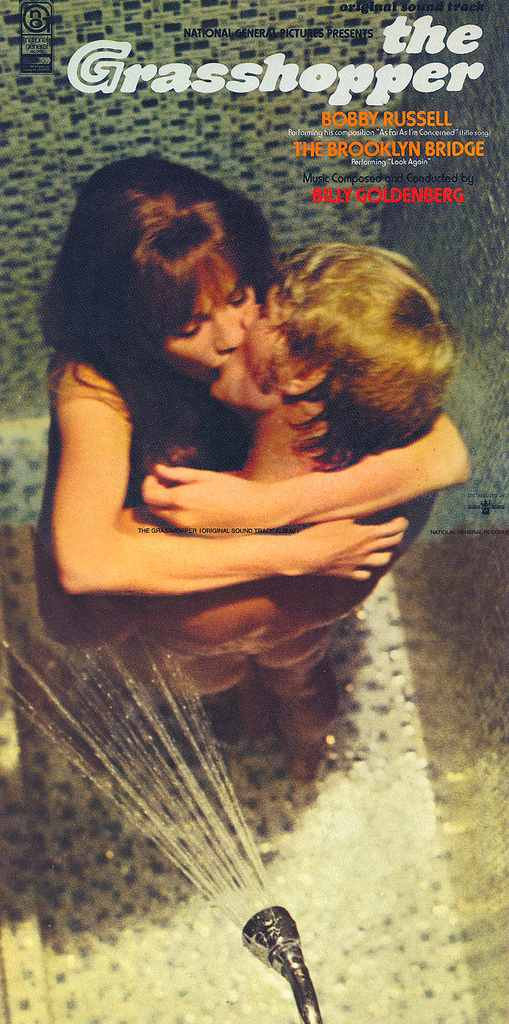
Then just 13-years-old, I was drawn to the photo on this bi-fold LP jacket which offered, on the front, an image of star Jacqueline Bisset locked in a passionate embrace with co-star Christopher Stone. On the back, however, was the racy "reveal" of their tryst location being a shower stall. At thirteen this was pretty heady stuff. Coming across it in a record store made it even more of a shock to the senses. 
Looking at the album cover today, I'm surprised how sexy an image it remains given its relative modesty.  Have I mentioned what's on the inside? The actual soundtrack album is very good, featuring songs by Brooklyn Bridge, a pre-"The Night the Lights Went Out in Georgia" Vicki Lawrence, and that song's composer, Bobby Russell, who was at the time Mr. Vicki Lawrence. 
The Grasshopper is a coming-of-age film with 25-year-old Jacqueline Bisset playing 19. As a rule, I tend not to be overly fond of coming-of-age films, chiefly because so many of them are about men and hinge on but a single narrative theme: the hero wants to get laid. The rest then dissolves into a lot of male wish-fulfillment fantasies leaning heavily on the callowness of youth as an excuse for the screenwriter to indulge in a lot of puerile sexism and misogyny-for-laughs. On the other hand, female coming-of-age films, while considerably rarer and seldom very well-known, tend to be more to my taste because the focus is more often on the emotional lives of the characters. (My absolute faves of this sub-genre are A Taste of Honey -1961 and Smooth Talk - 1985.)
The female perspective is so infrequently explored in films that even one that lists to the side of exploitation strikes me as a welcome change.   
The Grasshopper offers great glimpses of late-'60s Las Vegas 

In attempting to dramatize the aimlessness of late-'60s youth while satirizing the swinging, anything for kicks attitude prevalent at the time, The Grasshopper at times feels like the crasser, less artful American cousin of John Schlesinger’s Darling. But despite the film's unsure directorial footing (TV sitcom director Jerry Paris—best known as the neighbor on The Dick Van Dyke Show—shows no real aptitude for sustained drama. Scenes play out episodically, like they've got built-in commercial breaks) The Grasshopper does succeed in capturing the essence of a particular type of American woman at a particular point in time in our culture. Of course, the “American” woman I speak of is the very British Jacqueline Bisset, serviceably, if unconvincingly, identified as Canadian for the film. (Which is ironic, given that the heroine of the little-known novel upon which this film is freely adaptedThe Passing of Evil, by Seance on a Wet Afternoon author Mark McShaneis British, the story taking place in London.)
The Goodbye Girl
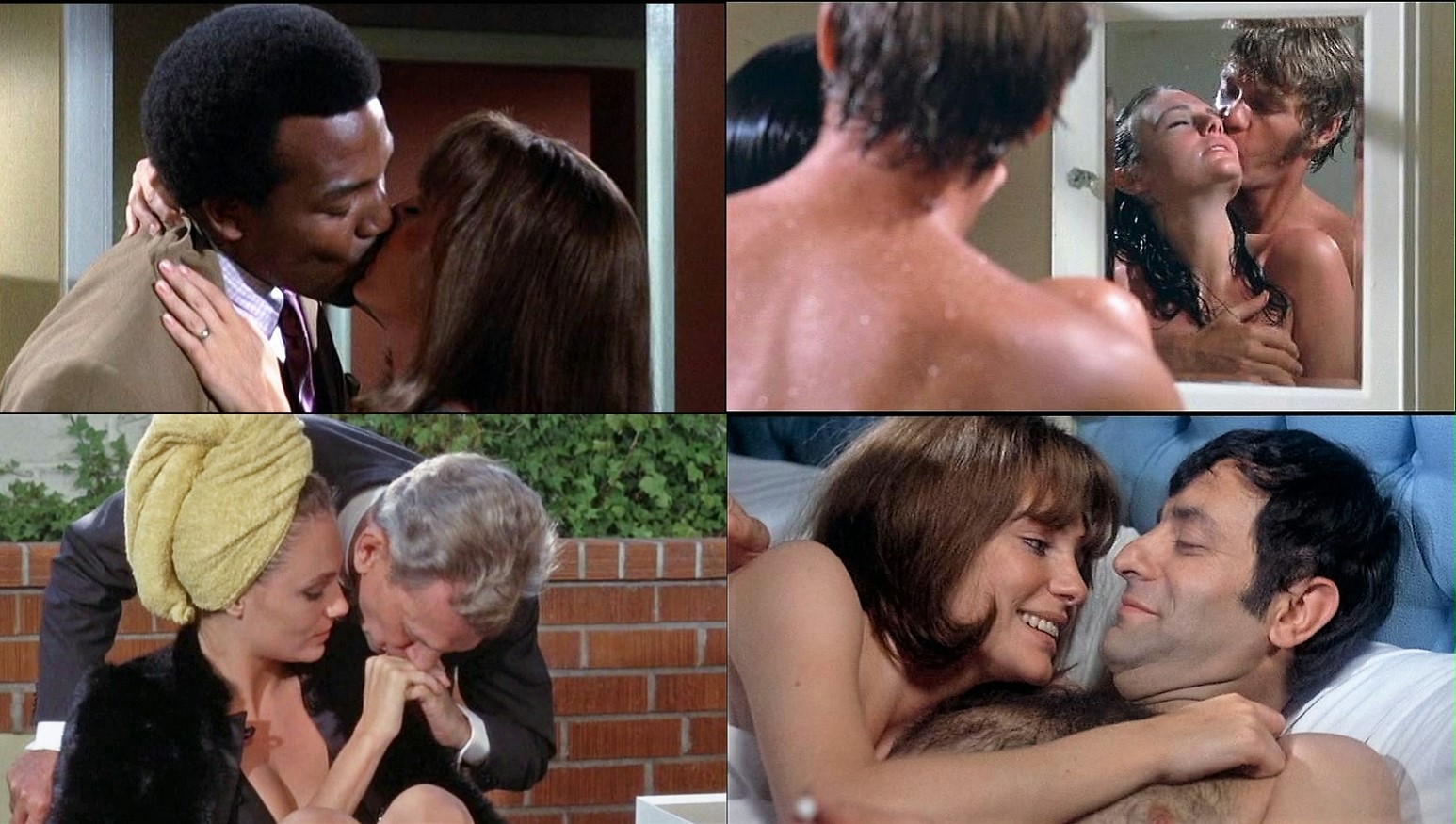
The late '60s and early '70s offered dozens of American movies focusing on the heroically romanticized plight of the misunderstood heterosexual white male as he struggled to find his identity in a society in flux and shifting beneath his feet. Black women are perhaps still waiting for their own definitive coming-of-age-films (a good place to start: Ossie Davis’ woefully overlooked 1972 film, Black Girl, or Kasi Lemmons' brilliant Eve's Bayou), but for women in general, The Grasshopper provides a period-relevant (now perhaps dated) portrait of a woman on a quest to find herself. A free spirit inflicted with the kind of existential restlessness usually only afforded male characters in movies. 
Jacqueline Bisset as Christine Adams
Jim Brown as Tommy Marcott
Joseph Cotten as Richard Morgan
Christopher Stone (in his film debut) as Jay Rigney
Corbett Monica (yes, THE Corbett Monica, Ed Sullivan fans) as Danny Raymond
Ed Flanders as Jack Benton
The Grasshopper was promoted with the tagline: “The story of a beautiful girl’s lifetime between the ages of 19 and 22.” And lest one assume the “beautiful” adjective was inserted solely for the purpose of a little sex-bait ad copy; rest assured, The Grasshopper’s Christine is one in a long line of movie heroines whose destinies are shaped as much by their provocative beauty as by their flaws of character. When Valley of the Dolls' Neely O'Hara bitchily comments on how Anne Welles got through life on a pass because of her "Damned classy looks," she is speaking of girls like Bisset's Christine. Girls whose looks open up so many doors for them that not until those looks begin to fade does it begin to dawn how few of those actually led anywhere. 

As the film begins, 19-year-old Christine Adams (Bisset) has dropped out of junior college in Kingman, British Columbia, left a note for her parents and slipped away in the wee small hours of the morning in her beat-up convertible. Her destination: Los Angeles, where she has plans to surprise and later shack up with her high school sweetheart Eddie (Tim O'Kelly). Her youthful optimism unfazed even when her car breaks down en route, idealistic hitchhiker Christine informs a friendly pick-up, “It’s very simple what I want to be; totally happy, totally different, and totally in love!” Of course, as soon as she says this, we know she doesn't have a chance in hell of being any of them.
You're Gonna Make It After All

What is Christine over the course of the story's three years? In no particular order: a bank teller, a mistress, a would-be actress, a schoolteacher, a flight attendant, a real estate saleswoman, a Vegas showgirl, a high-class call girl, a discontented housewife, a sugar mama, a widow, a kept woman, and (inevitably) a hooker. Whew! She also must have been very tired.
As you must have gleaned by now, the "grasshopper" of the title is Christine. She's the human embodiment of America’s "instant happiness" culture. A culture fearful of boredom, unable to withstand even a moment of silence, illness, or introspection, happiness is sensation. And if you don’t find it in your own backyard, America’s a big place with lots of backyards. All you need is a suitcase, a little resourcefulness, and who knows? Maybe happiness can be found in the next thing...and the next thing. 
Impetuous Christine falls for down-to-earth former quarterback Tommy Marcott 
Christine: Tommy, sometimes I envy you.
Tommy: Why?
Christine: You don't always have to be doing something. With me, it's sort of a disease. I guess it's because no matter what I'm doing or how much fun I'm having, somewhere way back in my head I'm thinking somebody somewhere else is having more fun than I am. 

WHAT I LOVE ABOUT THIS FILM
In its over-earnest efforts to reflect the timbre of the times, The Grasshopper is guilty of cramming so much into its story that it comes across as more sensational than sincere. So many controversial topics are covered and touched upon in the film’s scant 98-minute running time, Bisset's character seems at times like a tour guide through a new Disneyland attraction called Sixtiesland. We have rock bands, groupies, free-love, homosexuality, lesbianism, interracial marriage, nudity, drugs, prostitution, pedophilia, and physical abuse. It all sounds like pretty incendiary stuff, but as the events are processed through Christine's dissociative gaze, a great many of the most hot-button social issues of the day are presented in a disarmingly matter-of-fact manner.  
No '70s "Now" movie worth its salt was without at least one gay character. The Grasshopper doubles the "with it" quotient by featuring both a lesbian and a gay couple. Atypically for the time, all are presented casually, as just part of Christine's circle of friends. 

PERFORMANCES
Throughout the early 1970s, Jacqueline Bisset and Raquel Welch were the two sex symbols most publicly vociferous in their claims of never being taken seriously as actresses or offered non-ornamental roles. The modestly-talented Raquel Welch had a point; she was pretty much offered one crap role after another, each hinged on how well she filled out her requisite bikini. Bisset, on the other hand, after surmounting forgettable fluff like The Sweet Ride landed, in succession, three major releases with sizable, showy, female lead roles: The Grasshopper (1970), The Mephisto Waltz (1971), and Believe in Me (1971). 
Bisset is at her relaxed best in the brief scenes she shares with the always-welcome Joseph Cotten

Because I like Jacqueline Bisset so much, I wish I could say that she made the most of these opportunities, but as a young actress (she improved immeasurably in later years), Bisset was a bit like a hot-air balloon; as events in the story around her heats up, she seems to get lighter. With little of her character's inner-life coming through, we're left with her precise, clipped British accent and camera-friendly face as compensations. Bisset is fine in scenes requiring wide-eyed optimism or vague restlessness, but as Christine's life begins to spiral out of control, one is made aware of Bisset's emotive shortcomings.  
We're Gonna Make Our Dreams Come True
The Grasshopper was co-written and produced by TV's Garry Marshall (Happy Days, Laverne & Shirley). Here Garry's baby sister Penny Marshall (Lavern herself, left, holding the ruler, pictured with Eris Sandy) plays a member of the "Plaster Casters" - a reference to real-life '60s visual artist/groupie Cynthis Albritton, who famously made plaster casts of the erect penises of rock stars.

THE STUFF OF FANTASY
Showgirls:1970. In his autobiography Wake Me When It's Funny, producer Garry Marshall writes that the original leaping pattern for The Grasshopper in preliminary screenplay drafts was considerably more global (London, New York, Hollywood) but for budgetary reasons, Las Vegas became the dominant location. I can't say I mind one bit. The shots of a long-gone Vegas Strip and the behind-the-scenes glimpses into those old-fashioned Vegas reviews are fabulously nostalgic.
The grasshopper perched first one place, then another...wherever she happened to land. And then she moved on. (Ad copy from the film's poster)

THE STUFF OF DREAMS
When it comes to authenticity of voice, I suspect The Grasshopper would have benefitted from having at least one woman and one person under the age of 30 involved in its creation. The screenplay, a collaboration of three men on the far side of their teen years, is more of an outsider's rumination on the young. Christine's swift journey from innocence to world-weariness... a look at a rapidly changing world and a portrait of the emotional cost of no-strings freedom...has the air of a cautionary tale about it, and I don't really think that was the film's objective. 
What's lacking is Christine's voice. She's at the center of everything, be we watch her from a remove and can't really put our finger on the source of her personal dissatisfaction. This leaves her as a Candide-like character, reacting to the world and being changed by it, but not really conveying to us what she wants from it short of non-stop sensation. 
In Bob Rafelson's Five Easy Pieces (released the same year) Jack Nicholson also played a character who didn't know what he wanted from life or what life wanted from him. That film had been preceded by seemingly a dozen others similarly fixated on the state of the disillusioned white male, and its success guaranteed that it would be followed by just as many.
By no stretch of the imagination is The Grasshopper in the same category as Five Easy Pieces, but you can understand why it might hold a special place of nostalgia for me. It's not often (Michael Sarne's Joanna - 1968 qualifies) that the movies even considered how the modern world might be dissatisfying for women. Plus, no one gets abandoned at a gas station restroom.

And a parting shot in memory of that glorious backside that sparked my interest in The Grasshopper in the first place...

Copyright © Ken Anderson  2009 - 2012

Tuesday, July 17, 2012

THE FAN 1981

At a time when most of her industry peers were retired, forgotten, or guesting on episodes of Fantasy Island and The Love Boat, 56-year-old Lauren Bacall was enjoying a career resurgence and public visibility rivaling that of her 1940s heyday when she was known as “The Look.”  The year 1981 saw Bacall headlining in the Broadway musical Woman of the Year; topping the bestseller charts with the paperback release of her 1978 memoir By Myself; and shilling everything from jewelry to cat food to coffee (favoring High Point coffee for its deep, rich "culah" and deep-brewed "flava") on TV and in print ads.
But most remarkably, in the multiplex, mall-rat, teen-movie demographic era of the '80s, Bacall was starring in a nine-million-dollar major-motion-picture release.
The Fame Game

The Fan, a suspense thriller based on Bob Randall’s 1977 epistolary novel about an aging Broadway star stalked by an obsessive fan, gave Bacall arguably the biggest role of her career. Certainly, the first to require her to carry an entire film on her own.

Filmed on location in New York from March to July of 1980, The Fan was poised for release at the most opportune time to capitalize on Bacall’s already-in-motion Broadway and bookshelf publicity. Unfortunately, as The Fan’s PR-friendly release date of March 15, 1981, neared, several real-life, obsessive fan-based tragedies occurred (targeting John Lennon and then-President Ronald Reagan), conspiring to make this fame-culture melodrama seem more an exercise in exploitative bad taste than a timely social drama of ripped-from-today 's-headlines relevance.
Lauren Bacall as Sally Ross
Michael Biehn as Douglas Breen

Maureen Stapleton as Belle Goldman
James Garner as Jake Berman
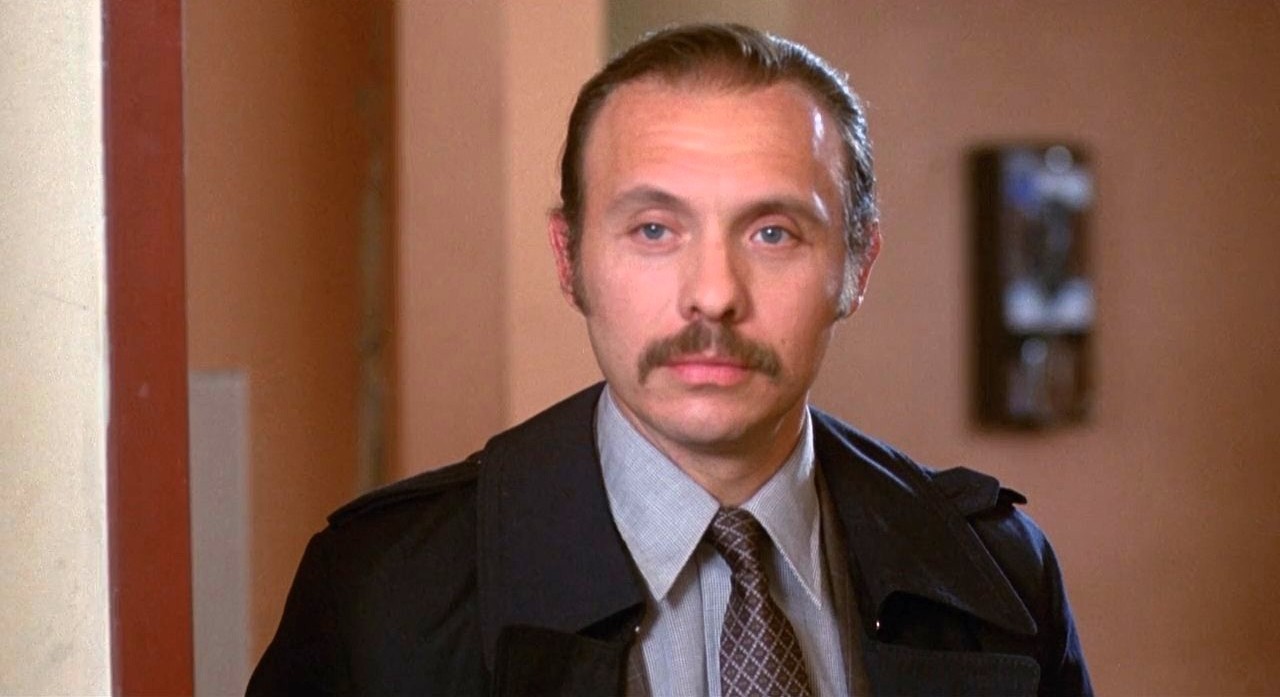
Hector Elizondo as Inspector Raphael Andrews
Kurt Johnson as David Barnum

If musical theater geeks, Glee habitués, and folks capable of making it through an entire Tony Awards broadcast ever longed for an '80s slasher film to call their own, then The Fan more than fills the Playbill. This unappetizingly bloody yet oh-so delectable/derisible blend of backstage musical, 1940s career-woman soap opera, slasher-flick, and woman-in-peril melodrama is high-camp movie nirvana. An upscale cousin of the '60s hagsploitation genre, The Fan might have traded seasoned glamour for the usual grotesquerie, but, in keeping with the subgenre's requirements, The Fan's raison d'être remained the prolonged persecution and victimization of a mature star from Hollywood's Golden Era. 
Bacall on the June 8, 1981, cover of People Magazine
When The Fan opened in theaters in the spring of 1981, the movie...to borrow a line from one of the hooty Louis St. Louis (Grease 2) showtunes composed for Sally's Broadway opus..."Got no love” from either audiences or critics. Patrons old enough to be enticed by the film's elder cast risked having their blue rinses turn stark white at the sight of the movie's copious bloodshed and some of the vulgar, Bogie-wouldn't-stand-for-this dialogue: “Dearest bitch, see how accessible you are? How would you like to be fucked by a meat cleaver?” Yikes!! 
Similarly, the teen demographic ordinarily drawn to slasher films wasn't quite sure of what to make of a movie set in the middle-aged, Sardi's-and-cigarettes world of the New York legitimate theater.  A wholly uninspired publicity campaign only added to the film’s troubles
The poster's stark graphic design had a generic slasher-film look that did nothing to sell the film to the public. And there's no other way to describe the inclusion of an anonymous but obviously "young" victim on the poster as anything other than misleading.  

Had The Fan been a play, it would probably have closed in Boston. Whisked off screens within weeks of its release, The Fan resurfaced with some regularity on cable TV venues like HBO and Showtime throughout the '80s before ultimately disappearing into relative obscurity. Obscurity so complete that Robert De Niro's unrelated but same-titled 1996 sports-themed film has totally eclipsed Bacall's The Fan in the public's memory.

Happily, The Fan's recent DVD release has rekindled interest in this very '80s curio. A glimpse back at a New York still atmospherically seedy. A vision of a world filled with record stores, typewriters, payphones, legwarmers, and heavy smokers. All with nary a Starbucks in sight. And while it's no undiscovered classic, The Fan does have its merits (most of them camp-related, I'm afraid) that make it a movie worth rediscovering. Not the least of them being Lauren Bacall, a smoking, drinking, tough-as-nails star of Broadway and the silver screen, playing a smoking, drinking, tough-as-nails star of Broadway and the silver screen. And convincingly, too!

The intersect of stardom and fandom
"And the audience LOVES me! And I love them. And they love me for lovin' them, and I love them for lovin' me. And we love each other. And that's 'cause none of us got enough love in our childhoods. And that's show biz, kid!"  - Fred Ebb

No low-budget, body-count slasher flick featuring nondescript teens stalked by a masked phantom, The Fan was conceived as a stylish, A-List, Hitchcockian thriller along the lines of Eyes of Laura Mars (1978) and Brian De Palma’s Dressed to Kill (1980). The latter, a sleeper hit that garnered '50s sexpot, Angie Dickinson, some of the best notices of her career. Something that Bacall wouldn't have minded.
That's how it started, but that's not how it stayed. 

Produced by movie/music mogul Robert Stigwood on the downturn side of a '70s winning streak that included youth-centric films like Jesus Christ SuperstarSaturday Night Fever, and TommyThe Fan was Stigwood’s most expensive film to date (some sources say that dubious honor belongs to 1978's Sgt. Pepper's Lonely Hearts Club Band ), and his first stab at cracking the grown-up ticket-buying market. To this end, he amassed a distinguished cast of New York actors and pedigreed Broadway composers (Marvin Hamlisch and Tim Rice collaborated on two–fairly terrible but nonetheless irresistible–original songs). On the production end, he secured the talents of up-and-coming first-time director Edward Bianchi (from TV commercials and music videos) and choreographer Arlene Philips (Can’t Stop The MusicAnnie).
If you've ever seen a Lauren Bacall musical, you know that her being lifted and carried about is a requisite of the choreography. Amusingly, following the DVD release, a number of online reviews questioned Bacall's "believability" as a Broadway musical star in The Fan...reviews that later expressed surprise after learning that not only was she a Broadway musical star in real life, but had two Best Actress Tony Awards to prove it (Applause - 1970 and Woman of the Year - 1981).

But as the saying goes, the best-laid plans of mice and men often go awry, and somewhere between screenplay to movie-house, The Fan transmogrified into a film beset by:
1) Bad decisions -  Friday the 13 became a hit during The Fan's post-production, prompting Paramount to order reshoots to ratchet up the violence. 
2) Bad timing and bad decisions - Three months before The Fan's release, John Lennon was killed by an obsessive fan outside NY’s Dakota apartments (as it happens, also the home of Lauren Bacall), after which it is said the film's original downbeat ending (if true to the novel) underwent some 11th-hour tinkering and reshoots.
3) Bad luck -  Bacall's idea of promoting The Fan was to express to the press her disappointment in the finished product. Making matters worse, three weeks into The Fan's less-than-illustrious release, a Jodie Foster-obsessed fan attempted to assassinate President Reagan. Suddenly, a film that very few people were interested in in the first place began to look like a movie trying to capitalize on tragedy. 
Bacall the Buzzkill
Bacalt to People magazine: "The Fan is much more graphic and violent than when I read the script." Anna Maria Horsford (who appeared in Stigwood's Times Square in 1980) as detective Emily Stolz

Stigwood severely scaled back his usual bombastic pre-release publicity for The Fan (indeed, STD results have been released with more fanfare), while Paramount added a disclaimer to its theatrical trailers asserting that The Fan was in no way inspired by John Lennon's death. The latter decision prompted the outspoken (i.e., biter of the hand that feeds it) Bacall to publicly say of the gesture: “I think it’s disgusting, revolting, and exploitive!”

In the end, it didn't really matter, because The Fan wound up being one of those rare films capable of offering audiences simultaneously contradictory experiences––none of which were satisfactory. Stylishly shot, overflowing in chichi urban gloss, and embellished with a chilling Pino Donaggio score (CarrieDon’t Look Now), The Fan ultimately failed to find an audience because it clearly didn't know who the hell that was. Classic movie fans familiar with Lauren Bacall thought the film was too classy to be so trashy; slasher fans thought the film wasn't trashy enough. Gays had their own problems with the film.
Strangers in the Night

The Fan did itself no favors by alienating the very audience most receptive to a film offering up ample doses of musical theater, backstage drama, show tunes, tight male bodies in various states of undress, and Lauren Bacall in full Margo Channing mode. On the heels of Windows (1980), a stalker thriller about a lesbian psychopath, and Cruising (1980), a crime thriller about a gay psychopath, many members of the Queer community felt The Fan's closeted, theater-queen stalker was one gay psycho too many for so young a year.
None of that applied to me, however. I was a presold audience in and of myself. I’d read The Fan back in 1978, intrigued by how the book used the thriller genre to comment on the odd love-hate relationship between stars and their adoring public. I was also a longstanding fan of Lauren Bacall from her old movies with Bogart on The Late Show, Applause (the 1973 TV broadcast, anyway), and Murder on the Orient Express; so I was thrilled when I heard she'd been cast.  (Later, in 1983, I had the thrill of seeing Bacall perform live in Woman of the Year when the Broadway musical came to Los Angeles.)
Dana Delany making her film debut

Feiga Martinez as Elsa

Adding to my anticipation was the fact that Edward Bianchi was hired to direct, and Arlene Phillips was to do the choreography. Bianchi & Phillips had collaborated on a series of eye-popping Dr. Pepper commercials in the late '70s for the advertising agency Young & Rubicam. Commercials I had been inspired by and borrowed from for a couple of my film school projects. When I also learned that Broadway great Maureen Stapleton had joined the cast and that Bacall’s rumored real-life paramour, James Garner, was also on board, The Fan swiftly became one of the most eagerly-awaited films of the year...for me, anyway.

I saw The Fan on opening day at Grauman’s Chinese Theater, where the smallish audience of young people in attendance (clearly in search of a good scare) was underwhelmed. I, on the other hand, felt as though I’d died and gone to camp film heaven. Not since Eyes of Laura Mars had I seen such a slick-looking thriller. One that can be enjoyed on so many levels at once. I wound up seeing it a total of three times before it disappeared from theaters.
Shot on location, The Fan provides many great glimpses of 80s-era New York.
Here, the famed Shubert Theater is the site for Sally Ross' opening night in Never Say Never; the fictional musical providing The Fan with so much of its camp appeal


WHAT I LOVE ABOUT THIS FILM
What brings me back to The Fan time and again are its many sequences depicting the behind-the-scenes creation of the fictional Broadway musical Never Say Never, which is set to be the singing-and-dancing debut of its star, Sally Ross. 
With its use of established Broadway dancers, NY locations, and a knowing attention to procedural detail, the feel is very authentic, very 80s, and very atmospheric. I find these scenes a bit hooty, to be sure (what with all those legwarmers and Arlene Philips' trademark pelvis-thump-and-squat Hot Gossip choreography), but I have to say all of it contributes an exciting verisimilitude to the movie and gives us a refreshingly novel backdrop for a suspense thriller. 
Silly as the musical numbers seemed to me, they were also undeniably exciting and terrifically fun. They do a good job of establishing Sally as a high-level star, and, in contrast to the smallness of Douglas Breen's life, the showy glamour of it all makes his obsession understandable.  
Of course, it doesn't hurt that I saw this film during my early days as a dance student, when the whole performing arts world was still very new to me. This movie got under my skin so much that when, in 1983, I took my first trip to New York, I took classes at Jo Jo's, the studio featured in the film.
That's Kurt Johnson providing literal backup to Lauren Bacall as she sings " A Remarkable Woman," one of two Marvin Hamlisch/Tim Rice compositions introduced in the film
UK Choreographer Arlene Phillips wouldn't actually choreograph for
Broadway until 1987's Starlight Express
All The Boys Love Sally
Broadway dancer Justin Ross (l.) appeared in the film version of A Chorus Line, and dancer Reed Jones (r.) originated the role of Skimbleshanks in the original Broadway production of Cats 

 PERFORMANCES
If you’re going to make a film about the kind of old-school, glamorous, showbiz diva capable of inciting the flames of obsessive fandom, you couldn’t do much better than landing all-around class act, Lauren Bacall. Her gravitas as a full-fledged movie star of the golden era lends The Fan an instant shot of legitimacy every time she appears. In one of the largest roles of her career, Bacall is not always filmed as flatteringly as you'd expect, but the effect is rather refreshing. Her face looks terrifically lived-in, and her still-striking looks serve as a welcome change from the botoxed mannequins we've grown used to. Playing a role that isn't perhaps much of a stretch, she's awfully good. So good, in fact, that I kept wishing the film would just let the story's natural character conflicts (an aging star grappling with loneliness, self-doubt, and vulnerability) play themselves out, minus all the genre machinations.
Bacall's appearance on Garner's TV show The Rockford Files in 1979, followed by their re-appearance in Robert Altman's HealtH (1980), and yet again here in The Fan, really had gossip-columnist tongues wagging about a romance between the two

THE STUFF OF FANTASY
The '80s come vividly alive in the film's Broadway musical sequences, which are sort of Solid Gold meets Can't Stop The Music. As would be the case with the Broadway musical numbers in 1983s Staying Alive, it's near-impossible to imagine just what kind of Broadway this could be, as the numbers look more appropriate to a Las Vegas revue. But they left me wanting more, not less. (I feel safe in saying I'm likely the only person who felt that way.)
A Remarkable Woman
More Like Hot Flash, Baby, Tonight
I saw The Fan the night it opened at Mann's Chinese Theater in L.A., and I swear,  the entire audience did a collective spit-take when Ms. Bacall launched into this hilariously inappropriate disco-ditty.

THE STUFF OF DREAMS
I've never considered The Fan to be as bad a film as its reputation suggests. Its screenplay is clichéd to be sure (the stage doorman is actually named “Pop”) and the violence needlessly gruesome for such a visually distinguished and stylish film (Bianchi’s music video background is in full evidence), but with a provocative theme and talented cast, The Fan has quite a bit going for it even with its flaws. 
Griffin Dunne, a few years before his breakout
role in Martin Scorsese's After Hours (1985)

Celebrity and fan obsession is a compellingly intriguing topic for a thriller. The whole codependent, love/hate, need/resent, fear/envy aspect of the “relationship” between the famous and the adoring public is ripe fodder for film treatment. The connection between celebrity and fan is a "relationship," by design and necessity, doomed forever to be one-sided: the fan feels an intimate kinship with someone who doesn't know they exist. Perhaps because of this imaginary, essentially hungry, connection, it's no surprise that fawning fandom can quickly turn to bilious hate if the fan’s attention is even marginally rebuffed.
I’m reminded of a scene in Martin Scorsese’s The King of Comedy (a marvelously dark black comedy about fan obsession that would make a great double-bill with The Fan) in which talk-show host Jerry Lewis is walking down the street. When a fan at a public phone asks him to say a few words to her friend on the line, he politely demurs, claiming he's running late. At this point, the seconds-ago adoring fan flips to bile-spewing enemy, shouting “You should only get cancer! I hope you get cancer!” Yikes! 
But such is the mercurial, frighteningly delicate line between love and hate that is fandom and celebrity obsession. 
If The Fan had set its sights on examining this already terrifying dynamic as a strictly psychological thriller, it could have provided an insightful, genuinely chilling look at our increasingly celebrity-obsessed culture. By going the slasher/stalker route, The Fan cheapens and sensationalizes the material, making the events seem more remote and unlikely than they are in reality. 
"It's better than pot. It's better than booze. A shot of applause can stamp out the blues."
Lyrics from the title song of Bacall's first Broadway musical, "Applause"  

Anyone who has ever attended a celebrity autograph convention or looked at the crowds outside a movie premiere knows how Day of the Locust-like and unnerving celebrity worship feels. There are so many things The Fan does right (depicting the many ways in which the famous are vulnerable to the public, conveying how the promise held forth by fame-culture fuels a never-to-be-satiated hunger in fans) but in not trusting the inherent, subtle creepiness of the material as is, misses a terrific opportunity to scare us with a bracing look at ourselves.
When it comes to The Fan, one might have wished for a little more finesse in the areas of motivation and character, but I seriously have a soft spot in my heart for this movie...mostly centered around the Broadway setting, the images of a still gritty and grimy New York, and reminders of my early years in dance. And, of course, it really is great to see late-career Bacallwith that amazing Gena Rowlands-like mane of haircommand the screen once more. Who was it that said, "Nostalgia ain't what it used to be"?

Clip of legwarmers in action in "The Fan" (1981) 


Copyright © Ken Anderson   2009 - 2012