
Rosemary's Baby: Child of the '60s:
Rosemary's Baby was released in June of 1968. And as social climates go, one couldn't find a year more defined by stress, fear, and uncertainty than America
 |
| The real-life Time Magazine cover, dated April 8, 1966, poses the unasked question augured by Rosemary's Baby's unsettlingly ambiguous ending |
The seemingly insurmountable hurdle faced by anyone endeavoring to make a horror film in the tumultuous atmosphere of the late-'60s lay in determining what could possibly frighten an audience that, on a nightly basis, had beamed into their homes the violence and real-life terrors of war and protest confrontations escalated by the police and military. Audiences who, via photojournalism periodicals like Life and Look, regularly confronted graphic evidence of a nation growing increasingly chaotic. What fictional creature or imagined narrative could compete with the real-life horror that was modern America
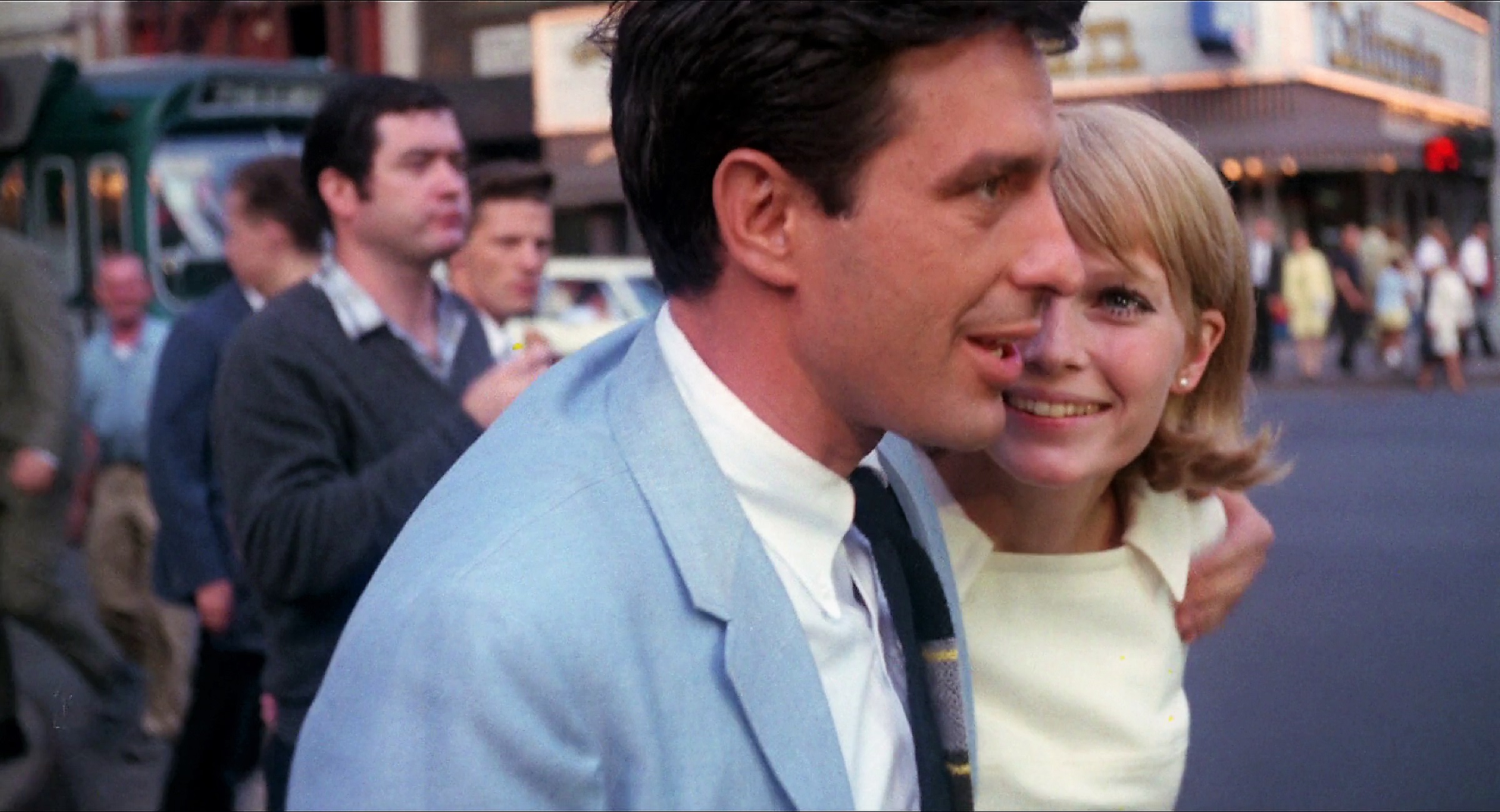
Enter, Rosemary's Baby. Ira Levin's cannily-plotted 1967 bestseller was a contemporary horror story about modern-day witchcraft. Classic gothic horror conventions were revitalized by reimagining them through the prism of an emerging new worldview. A world in which drafty castles, thunderstorms, cobwebs, bats, and creaky doorways had long ceased being viable mechanisms of fear. A world of reason and logic that had moved (or so it thought) beyond the primitive influences of superstition and myth. Rosemary's Baby proposed that even in a world where God and religion were deemed obsolete, there remained unexplained (and unimaginable) things that never died. And evil that was impervious to the passage of time.
 |
| Mia Farrow as Rosemary Woodhouse |
 |
| John Cassavetes as Guy Woodhouse |
 |
| Ruth Gordon as Minnie Castevet |
 |
| Sidney Blackmer as Roman Castevet |
Polanski threads the tale of a young bride's mounting certainty that a coven of witches has evil designs on her unborn child with both cultural subtext (it subtly proposes that the dawning of the year "One" [1966] and the birth of the Antichrist on earth are the explanation for 1968's real-life horrors) and a sense that many of Rosemary's anxieties are the product of her imagination. Polanski initially filmed and later deleted several scenes that distinctly confirmed Guy's involvement with the coven and purposely gave all of Rosemary's fantastic fears rational alternatives. An avowed atheist, Polanski wanted to make an occult horror film about witchcraft and Satanism that would play just as well as a psychological thriller about a pregnant woman suffering a severe paranoid breakdown. No matter how the film is viewed, in Polanski's deft hands, Rosemary's Baby is an intense and atmospheric slow-boil horror experience that also works as an overwhelmingly persuasive allegory about the durability of evil.
Watching Rosemary's Baby, it's difficult not to find yourself succumbing to the darkly-comic overtones of its somewhat audaciously clever plot: The living Devil born in a creepy Manhattan apartment building (the notorious Bramford, portrayed externally by the equally infamous Dakota, site of the tragic 1980 shooting death of John Lennon) to an ordinary woman. Indeed, a lapsed Catholic of wavering, undefined faith, used as a vessel by a coven of septuagenarian Satanists to herald the end of God's hegemony and the beginning of new, Satanic world order.
 |
| Maurice Evans as Edward "Hutch" Hutchins |
 |
| Ralph Bellamy as Dr. Abraham Sapirstein |
 |
| Charles Grodin as Dr. C.C. Hill |
Sixties audiences responded (perhaps more subliminally than consciously) to what the horror of Rosemary's Baby represented: it offered a timely and relevant "explanation" as to why the world of 1968 was such a hellscape. The son of Satan was born on earth in 1966, ushering in an era that the uncharacteristically impassioned Roman Castevet promised would- "Redeem the despised and wreak vengeance in the name of the burned and tortured."
So, Levin's perverse reversal of Christian myth provided a kind of cathartic release for '60s audiences, for in offering an "explanation" for the chaos of the times...even a horrifically unimaginable one...order felt temporarily restored.
 |
| Minnie: "Sometimes I wonder how you're the leader of anything!" The outwardly ineffectual Roman casts his steely and deadly gaze on Rosemary's friend Hutch, who proves to be too curious about that tannis root charm for his own good |
WHAT I LOVE ABOUT THIS FILM
Rosemary's Baby truly excels in its dramatization of the banality of evil. Though played for darkly comic effect, it's really rather jarring that the monsters in this contemporary horror film are harmless-looking little old ladies and men. Just the kind of colorless, ordinary people we are so quick to dismiss. Imagine how this detail played to audiences in the "Don't trust anyone over 30" climate of the '60s, and you get a taste of just how subversively eerie Rosemary's Baby seemed when it hit the screens. Audiences accustomed to horror films as low-budget, B-movie double-feature fare were disquieted when this major motion picture (which was intentionally shot to look as though it were a Doris Day comedy) with an art-house director and an A-list cast dared to make a horror film that took itself seriously enough to be genuinely frightening.
 |
| Guy's First Betrayal Polanski's use of a low camera angle allows Guy to shield his face from Rosemary (and the audience) the first time he lies to conceal his seduction by the coven |
Obfuscation and the barely-seen detail luring around the corner are among the tolls Polanski employs in his depiction of a world morally turned on its axis. In keeping so many of the film's horrors unseen or unsubstantiated, Polanski orchestrates a gradual, nightmarish transformation of all that is perceived as safe and familiar into the potentially dangerous and sinister. As a cleverly constructed parable of '60s unease, Rosemary's Baby captured the country's imagination and became a major boxoffice hit.
The gradual dismantling of the safe structures of Rosemary's world has a destabilizing effect on the viewer, making us empathize with her isolation and vulnerability.
 |
| Any security or safety Rosemary finds in her marriage is an illusion. |
 |
| Rosemary responds to father figures. Her friend Hutch is unsuccessful in protecting her from the superficially paternal Dr. Sapierstein, who betrays her |
 |
| Rosemary's body is under assault from within and without |
PERFORMANCES
Although the consistently underrated Mia Farrow contributed many outstanding performances to the films she made with Woody Allen (Broadway Danny Rose being a particular favorite), no performance of hers has ever got to me like her Rosemary Woodhouse. From the moment she appears onscreen, she exhibits a credible vulnerability and appeal that anchors the film in the kind of emotional reality necessary to make this horror fantasy work. The character from the novel comes to life in Farrow's fully-inhabited personification of a modern woman with a traditional streak (beyond home and family, there's no indication that she has any other ambitions) and a nagging guilt about her backsliding Catholicism. Best of all, her actions propel the plot. Her mistakes, strengths, vulnerabilities, and values determine how the coven's plans for her will play out.
At every turn, the actions and behavior of Farrow's Rosemary are rooted in something psychologically authentic. She's so good that no one else is imaginable in the role despite how well suited they were to Polanski's initial vision (he sought Jane Fonda or Tuesday Weld). I think Mia Farrow's Rosemary ranks with Faye Dunaway in Bonnie and Clyde and Jane Fonda in They Shoot Horses, Don't They? as one of the best performances by an American actress in the '60s.

THE STUFF OF FANTASY
As he demonstrated with his psychosexual thriller Repulsion (1965), Roman Polanski is an adept translator of the strange "reality" of the unreal world of dreams. The dissociated sounds, the dissipated images, the disconnected logic...Polanski captures all of these shifting subconscious impressions to great effect in crafting Rosemary's Baby's centerpiece moment--the dream/nightmare sequence. It's an eerie, atmospheric classic that's so effective that no two people see the events of Rosemary's dream in the same way. Like a real dream, its interpretation is ambiguous as it is subjective.


THE STUFF OF DREAMS
Rosemary's Baby wasn't the first film I ever saw; it just feels that way. At 11 years old, it was the first film to make an indelible impression on me. I never forgot it. Part of this was due to the fact that it was absolutely THE most frightening film I had ever seen to date and was responsible for innumerable bad dreams and a reluctance to enter dark rooms for months thereafter. Revisiting it over the years in revival theaters and special Anniversary screenings (memorably, one with producer Robert Evans in a Q & A at the Academy of Motion Pictures Arts & Sciences) only solidifies what I intuited back in 1968; Rosemary's Baby was and is a small masterpiece.
 |
| The scene that gave me a goosebump chill the first time I saw it |
A horror film that plays fast and loose with the conventions of the genre, blending elements of the psychological thriller and paranoid social drama. Beautifully shot, well-written, superbly acted, and above all, smart as a whip. During Rosemary's Baby, you never lose the feeling that you are in the hands of a director who knows exactly what he's going for and how to elicit precisely the response he wants from an audience.
It's a film of solid assurance in every aspect.

BONUS MATERIAL:
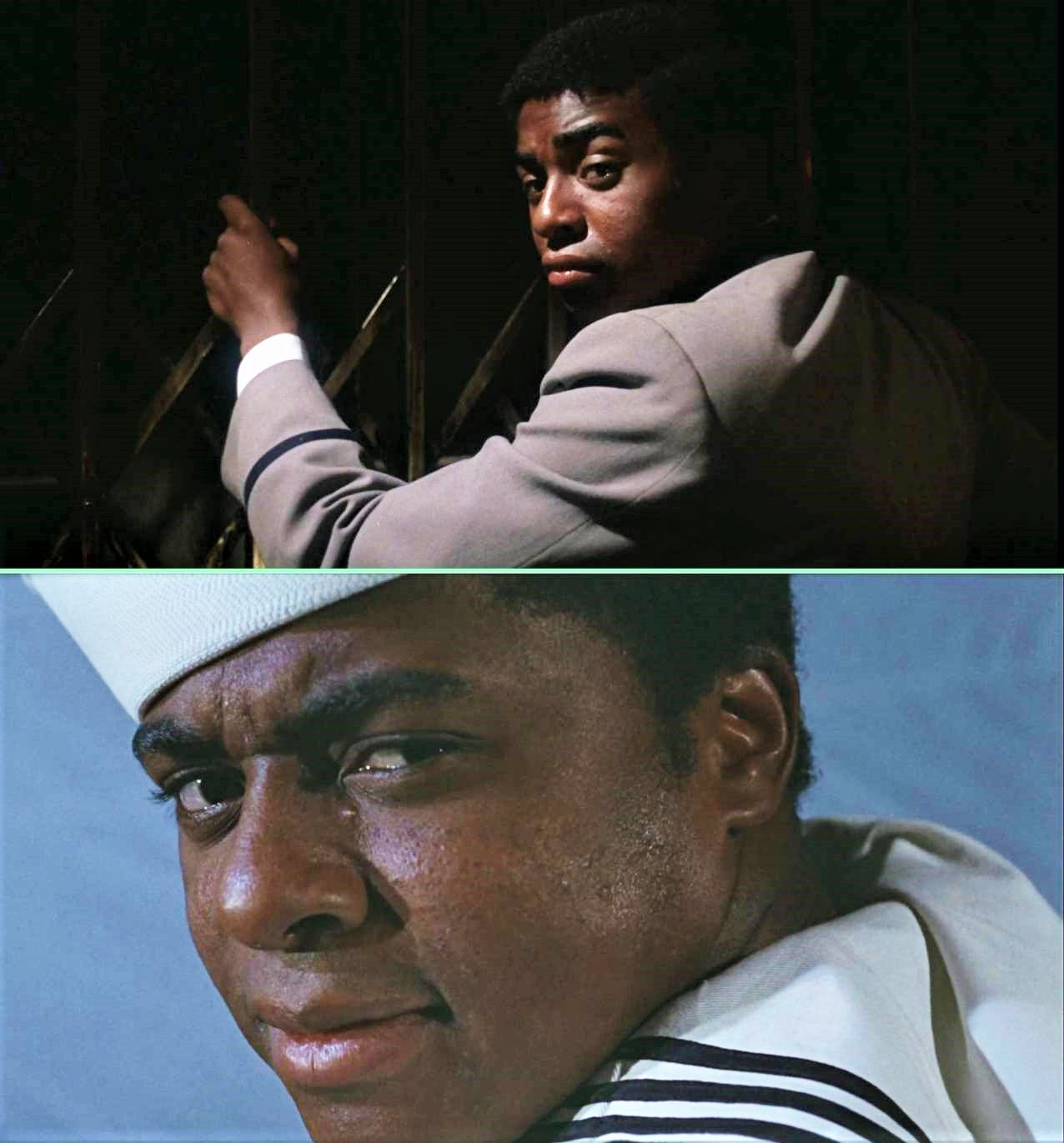
* 2019 addendum: In the superb Eddie Murphy movie Dolemite is My Name (2019) about Rudy Ray Moore and the making of Dolemite, D'Urville Martin is portrayed by Wesley Snipes.

AUTOGRAPH FILES:
 |
| My sister (my siblings are the only folks who still call me Kenny) got John Cassavetes to autograph this receipt when she saw him at a restaurant on Fairfax Avenue in Los Angeles in 1979. She knew I would get a kick out of it, and I did, indeed. |
 |
| "It's Vidal Sassoon. It's very in." The $5000 haircut |

On August 14, 1967, a week before production began on Rosemary's Baby, legendary hairstylist Vidal Sassoon was flown to Hollywood to give Mia Farrow's already short haircut a "trim" as a publicity stunt. I had the opportunity to interview Mr. Sassoon in 2003. An incredibly nice and gracious man.

Copyright © Ken Anderson 2009 -2011


