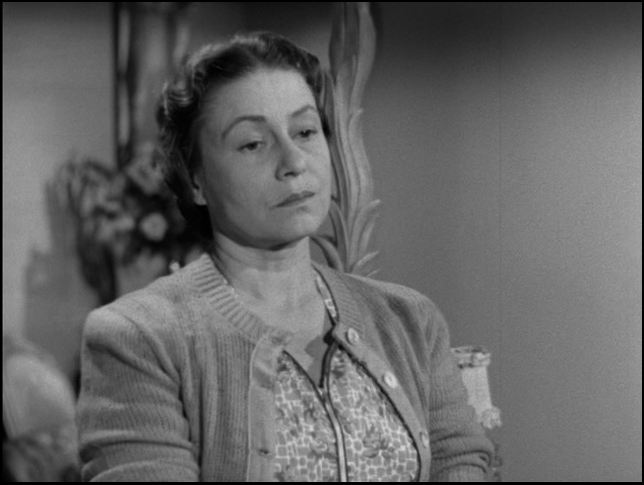
3 Women is such a thoughtful, intriguing film that most anyone I was interested in was likely to find something to like in it, but Andy Warhol's BAD (directed by Jed Johnson, but a delirious mash-up of those camp/trash geniuses, John Waters and Paul Morrissey) was definitely the litmus test.
 |
| Carroll Baker as Hazel Aiken |
 |
| Perry King as L.T. |
 |
| Susan Tyrrell as Mary Aiken |
 |
| Charles McGregor as Detective Hughes |
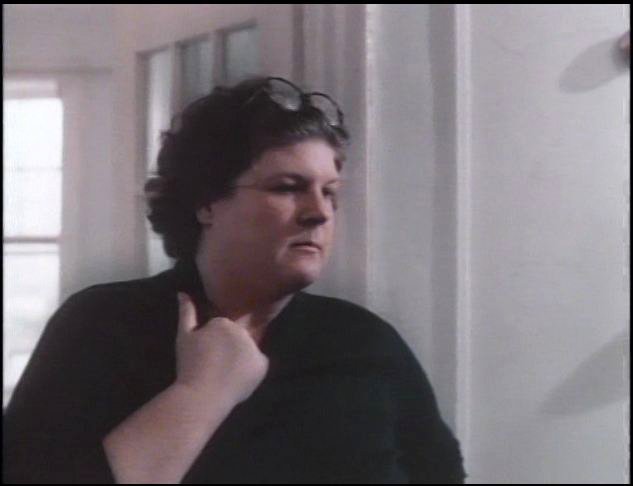 |
| Bridgid Polk as Estelle |
 |
| "Ow! God, this is electrocution!" |
WHAT I LOVE ABOUT THIS FILM
Perverse as this may sound, Andy Warhol's BAD reminds me of a simpler, gentler time in
 |
| Stefania Casini as P.G |
Today we live in a country where ignorance is rewarded (thank you, Jersey Shore), bad behavior is commonplace (Weiner, the sexting politician, Schwarzenegger the adulterer), and nobody denounces the hamburger for posing as steak (calling all Kardashians). Andy Warhol's BAD, once thought outrageously offensive enough to warrant an X-rating, is positively quaint and remarkably moral in comparison. I don't even think the movie would work today. You can't satirize the banal evil that lurks behind middle-class conformity, nor poke fun at tacky, suburban aspirations towards upper-class sophistication in a world that can't distinguish class from crass.
 |
| French Provincial Luxury- Hazel, enjoying the fruits of her labors |
Indeed, watching this film today feels like having front-row seats to the end of an era. What was once so hilarious about Andy Warhol's BAD -- finding that behind the blandly respectable facade of a middle-aged suburban housewife lurked the cold, commercialism-rooted amorality of a Murder Inc. mob-boss -- feels now like suitable fodder for the next reality show. In today's world, Hazel Aiken would be flooded with offers from daytime talk shows to "tell all." When the lowbrow and sleazy become the cultural standard for ratings, newspaper sales, and the fast track to celebrity, satire is out of place because the joke's on us.
Andy Warhol's BAD tries very hard to be nasty and mean-spirited--what with the television that seems to be on in every kitchen scene, spewing nonstop bad news and tragedy--but the entire film feels more humane and kinder than any 10 minutes of The Bachelor.
Hit-girls, Marsha (left - Maria Smith) and Glenda (right - Geraldine Smith)
flank the misanthropic Estelle as she plots revenge on a neighbor.
 |
| Estelle: "I'm telling you, people stink. All they do is eat, fuck, and watch TV." Marsha: "I know. The more you smell, the more they stink." Estelle: What's that supposed to mean?" |
PERFORMANCES
To her credit, Carroll Baker held no illusions about Andy Warhol's BAD providing her with any kind of American film comeback (it's her first American film since leaving the country in 1965). Quoted as recently as June of 2011 on working on the film:

Mary - "You're crazy! You're really not all there!"
New York
THE STUFF OF DREAMS
Though I speak of Andy Warhol's BAD as a comedy, it qualifies as such only in its darkest, most absurdist shades. Everything it targets is the America that America pretends not to be, so if it is brutal, violent, sadistic, xenophobic, and cruel, well, that's the good ol' USA. What makes it funny at all is that it's like a parodic vision of America if somebody had spiked our drinking water with truth serum. These ugly people are monsters, but they're monsters I recognize.
"It had nothing to do with filmmaking; it had nothing to do with any other experience I ever had. It was like working on the moon. But he (Warhol) wanted me, he cast me in it, I wanted to do it, and it was such a big hit in Europe ." - Carroll Baker New Journey Journal
Baker's level-headedness serves her well in Andy Warhol's BAD, for she creates in Hazel Aiken, one of cinema's most memorably twisted villains. (The role was originally offered to America
 |
| I saw Andy Warhol's BAD the weekend after it opened on Wednesday, April 27, 1977, at the Music Hall theater in San Francisco (I went so soon because the reviews were so bad; I wasn't sure it would be there another week). They sold the T-shirt in the lobby. My original — the one above is a contemporary knockoff —I wore to tatters. |
Baker makes Hazel devilishly deadpan in the character's blinkered, single-minded belief that she is just doing what has to be done ("I like to help people!"). If June Cleaver were an avaricious psychopath, she'd be something like Hazel Aiken. A woman so lacking in empathy she cheerily arranges contract killings in her kitchen while viewing Polaroids of gruesome crime-scene slayings as if they were vacation slides.
As the only remotely competent person amongst a menagerie of slackers and oddballs, Hazel's near-constant exasperation finds amusing, meta subtext in having Carroll Baker--an Academy Award-nominated, Method actress, working alongside Warhol's Factory "superstars"... many of whom sound as though they learned their lines phonetically.
(Substantiating my theory that big budgets sap the imagination of indie-filmmakers, John Waters, with a budget more than ten times that of Andy Warhol's BAD, mined similar material in 1994's Serial Mom, but it wasn't half as funny.)

Mary - "What kind of a grandmother are you? Having baby-killers in the house with a baby? She'd kill any baby!"
Hazel - (Indignant) "She would not! She only does what she's paid to do. You wouldn't pay her, so she wouldn't do it!"Mary - "You're crazy! You're really not all there!"
THE STUFF OF FANTASY
Movies about all-girl hit squads were an exploitation flick staple for years: Some Girls Do - 1969, Doll Squad - 1973, Invasion of the Bee Girls - 1973, but the lady killers of Andy Warhol's BAD are something else again. These women aren't well-trained assassins or pros. They're just bored, amoral young women looking to make an "easy" buck. Though Stefania Casini, Cyrinda Foxe, and Barbara Allen are each hilariously blasé enforcers on Hazel's hit-women roster, my favorites Marsha and Glenda "We're a sister act" (real-life sisters Maria & Geraldine Smith): the Laverne & Shirley of Dial-a-Murder. Armed with great bone structure, thick  |
| Dressed to Kill Looking like models in a Laura Mars photoshoot, Marsha (brandishing the stiletto) and Glenda lie in wait for their next victim. |
THE STUFF OF DREAMS
Though I speak of Andy Warhol's BAD as a comedy, it qualifies as such only in its darkest, most absurdist shades. Everything it targets is the America that America pretends not to be, so if it is brutal, violent, sadistic, xenophobic, and cruel, well, that's the good ol' USA. What makes it funny at all is that it's like a parodic vision of America if somebody had spiked our drinking water with truth serum. These ugly people are monsters, but they're monsters I recognize.
What works for me about this movie is that...unlike our pop culture and news outlets that make celebrities (or politicians) out of these reprehensible types, Andy Warhol's BAD sees and presents them as the contemptibly dim-witted bottom feeders that they are.
 |
| Banality of Evil |
As a movie fan, I find it reassuring when the monsters are easily identifiable—usually as crazily hateful maniacs and criminally unbalanced psychopaths. Perhaps that's because it's so unsettling in real life to be confronted daily with evidence that unspeakable evil is often perpetrated by the so-called "normal-looking" members of our society.
Hazel Aiken's cockeyed ethical standards, which are played for absurdist laughs (a proud capitalist, she willingly kills man, woman, or child for a fee, but draws the line at vulgar language and keeping stolen property in her home), underline what is so scary about most truly evil people: they consider themselves to be the most normal of all.
 |
| All In A Day's Work Amidst the trappings of middle-class domesticity, Hazel gets a call for another contract killing |
Hazel, with all her pragmatic speeches about personal responsibility, work ethics, and doing what has to be done because nobody else will do it, reminds me a lot (too much, actually) of the fear-goading political candidates, flag-waving radio commentators, and defenders of family values who cloak themselves in "old-fashioned values" to rationalize philosophies of hate.
The 1965 film The Loved One, which satirized the L.A.
 |
| Hazel - "You're really sensitive, aren't you? Well, I can't afford the luxury to be sensitive because I have to do everything myself!" |
I find it interesting to note that by current standards, neither The Loved One nor Andy Warhol's BAD, two films met with much hand-wringing over the declining state of decency and taste in the world, is particularly offensive. Indeed, in failing to in any way glamorize the lives and behavior of its principals, Andy Warhol's BAD is, as I mentioned earlier, a great deal more moral than what passes for "suitable for the entire family " TV entertainment today. It even throws a bone of hope to the audience when the lunkhead, played so nicely by Perry King, reveals that, as bad as he is, he isn't prepared to do anything for money. And given our current reality TV parade of self-degradation, how many people today can even say THAT?
Earrings and Lipstick
 |
| "Looks aren't everything." |
Oh, and for the record, both of my "Taste Test" films have been officially retired. I showed them to a fellow I was dating who not only loved them as I did, but, on a single viewing, opened my eyes to insights and jokes contained in both films that I had never seen before. Understandably, I couldn't let a guy like that go. That was 16 years ago, going on 17, and we still get a kick out of re-watching these films together. Even after all these years, we can make each other laugh just by uttering the raging Estelle epithet: "O'Reilly O'Crapface."
Clip from Andy Warhol's Bad (1977)
 |
| I have this striking poster framed in my living room |
Copyright © Ken Anderson 2009 - 2011