Showing posts sorted by date for query the prime. Sort by relevance Show all posts

Sunday, May 26, 2024

THE DRIVER'S SEAT 1974

Spoiler Alert: Crucial plot points are revealed in the interest of critical analysis and discussion

Elizabeth Taylor as Lise
Ian Bannen as Bill
Mona Washbourne as Mrs. Helen Fiedke
Andy Warhol as The English Lord
Guido Mannari as Carlo the Mechanic
Maxence Mailfort as Pierre - The Right Type

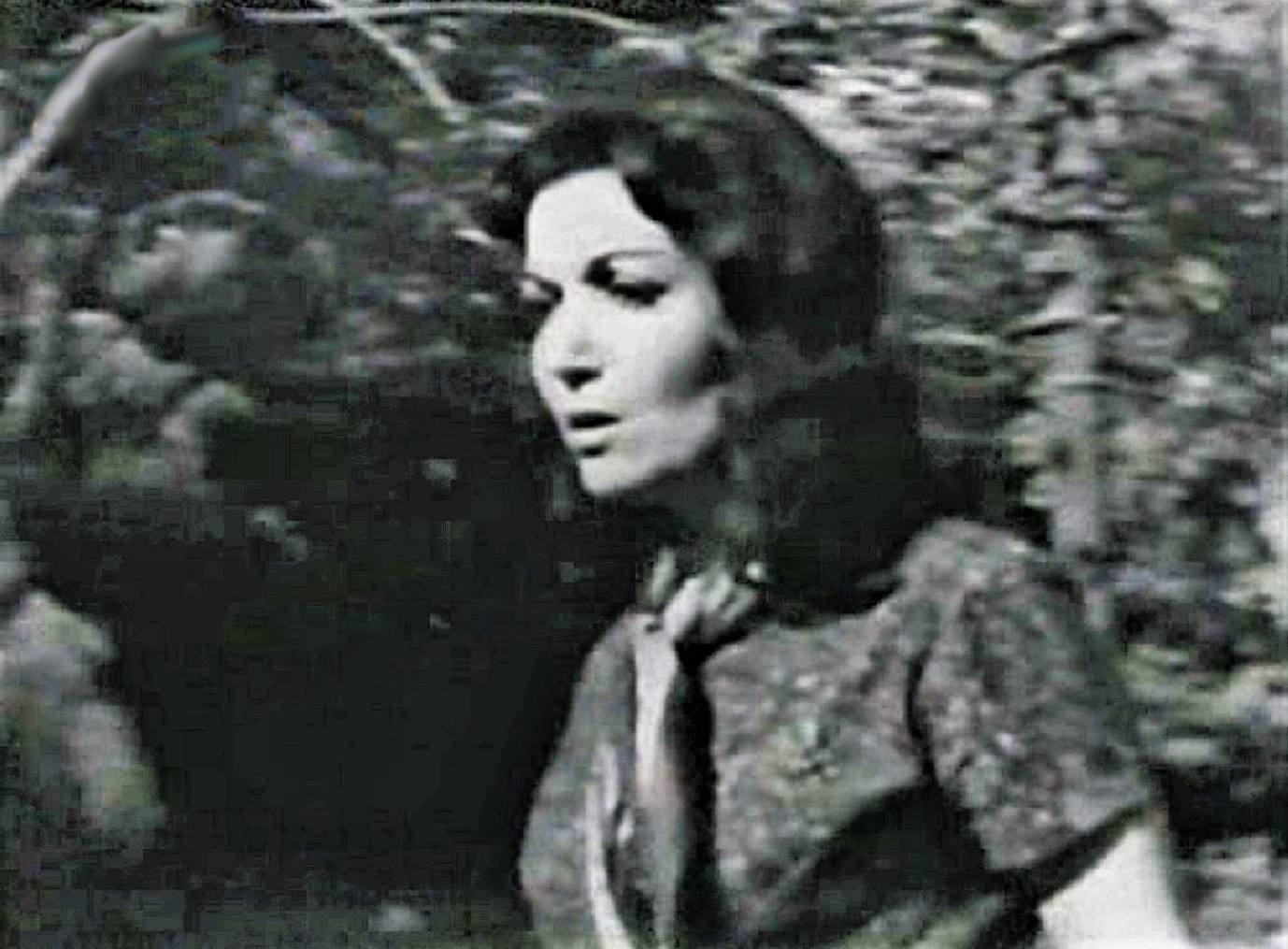
The Driver’s Seat (alternate title: Identikit) is a dreamlike, metaphysical grim fairy tale whose non-linear narrative—in its recounting—sounds a little like a collaboration between Edgar Allan Poe and David Lynch. This visually distinguished Italian production casts a game Elizabeth Taylor (during her quirky, art film phase) as Lise, a raven-haired Goldilocks who visits Rome on a determined quest to find a man who is not too hot, not too cold, but “just right” to serve as her Dark Destiny escort. 
Whereas Goldilocks’ curiosity led her to three domesticated bears, Lise’s schizophrenia-fueled search for her Wizard of Odd merely yields three unmitigated bores: one ideologically overbearing (Ian Bannen), the other sexually assaultive (Guido Mannari), and the third, empathetically apathetic (Andy Warhol).
But like Joseph in the Bible—the one who also favored the conspicuous masquerade of a coat of many colors—Lise, whose name means “Pledged to God,” isn’t one to let a few setbacks and disappointments shake her faith in the incorruptible purity of her morbid pilgrim’s progress.

Every detail of Lise’s journey is planned to be just so. She purchases a violent paperback novel (The Walter Syndrome by Richard Neely, a 1970 thriller about a serial killer) and throughout her trip, holds it in front of her like an airport greeter. 
"It's a whydunnit in q-sharp major and it has a lesson: never talk to the sort
of girls that you wouldn't leave lying about in your drawing-room
 for the servants to pick up" 
- from the novella "The Driver's Seat" 
  

As is the wont of fairy tales, Lise is assisted on her journey by a Fairy Godmother figure (Mona Washbourne) who supplies the crucial athame for Lise’s tryst of fate with her (literal) “man to die for.” It’s also traditionally fitting that through her guidance, Lise comes to the Dorothy Gale-esque realization that the very thing she has been searching for so intently, has been there all along, right under her nose, the entire time.
Getting to the Point
"It's in my mind, and I can't think of anything else but that 
you and my nephew were meant for each other."

A movie as confounding as it is compelling, The Driver’s Seat is based on the 1970 novella of the same name by author Muriel Spark (The Prime of Miss Jean Brodie). Spark, who considered The Driver’s Seat to be her best-written novel, labeled the book a “whydunnit” murder mystery because the story begins in the middle (Lise’s madness is already full-blown...we know not its source or duration, only that she has reached the end of her tether) and calls on the reader to disregard the story’s openly divulged victim and killer, concerning themselves instead with the motive. 
Easier said than done.

The Driver’s Seat is a mesmerizingly loopy movie that, while leaving me with more questions than answers, is imbued with such a poignant air of despairing sadness that it impressed me as something of a distaff Death in Venice. Which brings me to note that thus far in this essay, I’ve been being needlessly coy about something the novel reveals right off the bat: that Lise—in a perverse distortion of the fairy tale trope of the heroine waiting to be rescued by the idealized man—is searching for the perfect man to kill her. 
As a damsel in emotional distress who’s more desirous of release than rescue, Lise is staunch in her belief that the right man will “Recognize me for the woman that I am right away,” but is willing to leave only so much to chance. To speed things along and better facilitate the precise outcome she seeks, it’s necessary for Lise, like a Grim Reaper Dolly Levi, to be a woman who arranges things. 
Indeed, in taking the driver’s seat and micromanaging her predestined demise with the fastidious attention to detail of an overconscientious party planner, Lise, in this identity-crisis puzzler, assumes the identity of both murderer and victim.
Mrs. Fiedke- Will you feel a presence? Is that how you'll know?
Lise- Not really a presence. A lack of absence. That's what it is.

WHAT I LOVE ABOUT THIS FILM 
Directed and written with idiosyncratic assurance by Giuseppe Patroni Griffi (screenplay co-written by Raffaele La Capria), The Driver’s Seat is a dark (occasionally darkly comic) and melancholy portrait of a woman well past the verge of a nervous breakdown. 
Faithfully adapted from Spark’s oblique novella, the filmmakers have crafted an equally abstruse, illusory film that combines elements of a road movie (Lise’s journey being both literal and psychological), murder mystery (again, the why, not the who), and character study (everything that’s not presented as part of a police investigation into events that have yet to occur, is seen from Lise’s point of view). Along the way, The Driver’s Seat toys with concepts of perception-interpretation/identity-self as they relate to one of my longstanding favorite “human condition” themes: emotional alienation and the innate need to forge a connection with others.   
Our introduction to Lise is abrupt and totally lacking in qualifiers. First, encountered mid-argument with a saleswoman over a stain-resistant dress: “Do I look like the kind of person who spills things on my clothing?”… then Medusa-maned and mascaraed within an inch of her life as she embarks upon her gloomy Roman Holiday dressed like a color TV test pattern. 

The film takes the novel’s starts-in-the-middle story and future-intrudes-upon-the-present narrative structure and translates it into a deliberately fragmented, disorienting cinematic style that forces the audience to filter reality through Lise's alternatingly distracted/laser-focused gaze. Potentially mirroring Lise’s intensifying sense of isolation, the vision of the world we’re given feels lacking in warmth, subtly hostile, and ever on the brink of some sudden outbreak of violence. In this paranoid landscape of shadowy faces and elliptical conversations, everything and everyone feels just a little bit off.
Not the least, Lise herself, who, when her eccentrically flamboyant appearance isn’t drawing stares, eliciting giggles, or the haughty disdain of near-identical coil-coiffed salesgirls, moves about in an almost trancelike haze.
Lise, the Kook Magnet
Scottish actor Ian Bannen is positively brilliant as the macrobiotic food nut whose diet requires an orgasm a day. Nearly everyone Lise comes into contact with either fuels or feeds off of her erratic mood swings and neurotic compulsions. 

It’s ultimately revealed that there is a method behind Lise’s behavioral madness and that everything from her provocative appearance (we've seen that in her day-to-day life she dresses very conservatively) to her attention-getting conduct is calculated for deliberate effect. She’s seeking to make an impression, to leave a mark, to be remembered, to be identified. An attempt, conceivably, to achieve in death something she lacked in life.  
The Driver's Seat was released as Identikit everywhere but in the US. An Identikit is a system of criminal identification that collects facial feature details from witness descriptions and combines them to create a composite portrait of the individual they are seeking.  

The Driver's Seat narrative unfolds in a time-warp fashion, with Lise and the Italian police engaged in a simultaneous, dual manhunt. Both are in search of a killer, Lise before, and the police after. 


THE STUFF OF FANTASY
The first time I became aware of The Driver’s Seat was in 1973 (was I the only kid who read Weekly Variety in high school?). At the time, Taylor and Burton were in the throes of the first of their eventual two divorces, so despite Taylor’s comparative irrelevance vis-à-vis the New Hollywood, both she and the film were generating plenty of publicity traction. With Glenda Jackson, Jane Fonda, Karen Black, and Faye Dunaway crowding my movie infatuations back then, Elizabeth Taylor was more a gossip magazine stalwart and movie star for my parents than an actress I paid much attention to. 
Taylor had been effectively off my radar since 1968’s Secret Ceremony (which would make a great double bill with The Driver’s Seat, by the way), but my interest was reignited when she starred in the surprisingly effective mystery thriller Night Watch (1973). When I read that the forthcoming The Driver’s Seat (made between the movies Ash Wednesday and The Bluebird) was also to be a thriller, I was seriously stoked and eagerly anticipated its release. 
But like several other ‘70s releases that pinned their hopes on the Nostalgia Craze appeal of faded-luster Classic Hollywood (Mae West’s Sextette; Billy Wilder’s Fedora; Marlene Dietrich and Kim Novak in Just A Gigolo), The Driver’s Seat opened in theaters with all the fanfare of an ex-mobster entering the witness protection program. Despite Elizabeth Taylor’s star power, The Driver’s Seat (Taylor’s first completely foreign-made film) struggled to get American distribution and was barely shown outside of a handful of major cities. In fact, it wasn’t released in my neck of the woods (San Francisco) until 1978, by which time I had graduated from high school and moved to Los Angeles. 
Instead of opening in arthouses where it belonged, when The Driver's Seat finally had its San Francisco release in August of 1978, it played at one of the grindhouse theaters on Market Street on a double bill with a Sophia Loren movie I'd never heard of.

For the longest time, The Driver’s Seat existed as one of those movies more talked about than actually seen. And, as so often happens in such cases, its unavailability gave it a cult cachet. When I finally saw it in the mid-to-late ‘80s (a VHS rental, I think), The Driver’s Seat had earned the reputation of being one of Taylor’s so-bad-it’s-good camp-fests, surpassing even BOOM! (1968) in outlandishness. 
Armed with little else to go on, that's the perspective through which I approached it and enjoyed it. But as I’ve learned in the years since—after several revisits and reading the novella—watching The Driver’s Seat exclusively through the prism of its arthouse camp appeal is like not really seeing it at all.
Nothing goes well for Lise when she's not in the driver's seat

If the tenets of camp embrace artifice, stylistic excess, and a preoccupation with offbeat sex, then The Driver’s Seat more than qualifies for the classification. With its dialogue that wouldn’t sound out of place in Beyond the Valley of the Dolls: “When I diet, I diet. When I orgasm, I orgasm. I don’t believe in mixing the two cultures,”; Neely O’Hara-suitable outbursts: (Lise) “Well then, don’t just stand there staring at me like a chicken with one eye! Help me!”; and scenes of Taylor writhing around on a bed clutching her breasts, or Andy Warhol popping up like he’s en route to his Love Boat cameo, 12 years early…there’s no denying that The Driver’s Seat can be a delightfully kitschy howl.
I've never been sure if the bandage on Lise's left wrist is a character clue related to what was briefly disclosed early in the film regarding her history of mental illness, or merely evidence of the famously accident-prone actress' latest mishap.

But I contend—and this goes back to my interpreting the movie as something of a fractured fairy tale about a lonely and unbalanced woman’s romantic obsession with death—that The Driver’s Seat is such an unusual, even impenetrable story told with so few narrative guardrails that responding to it purely as camp was just the easiest, most entry-level route of access for me (laughter often being the go-to when one is confused or made uncomfortable by something ). But when I stopped trying to laugh at The Driver’s Seat, it surprised me how much I was moved and disturbed by it.
Lise-  I feel homesick.
Bill- Homesick for what?
Lise- My loneliness. I want to go back home to feel all my loneliness again.

Okay, I admit it. That exchange gave me waterworks. 

PERFORMANCES
While the results of her efforts tended to vary significantly, I nevertheless have to hand it to Elizabeth Taylor for not taking the predictable career path her global motion picture celebrity afforded. She could easily have gone on churning out formulaic, commercially successful potboilers like The Sandpiper and The V.I.Ps, but throughout the late '60s and ‘70s, she instead pursued daring, unconventional roles in often aggressively offbeat films.
I rank Elizabeth Taylor’s performance in The Driver’s Seat as one of her most emotionally resonant of this period, especially in the film’s latter third. It's then that the heretofore performative aspects of Lise’s madness grow more internal, evoking a weary despondency that’s truly heartbreaking. 
But paradoxically speaking, while I think Taylor is definitely the best thing in the film and its principal driving force (see what I did there?), I also think she’s its biggest liability—or rather, her inescapable Taylor-ness is. The Driver’s Seat is one of my favorite ‘70s films, capturing the darkness of Nixon-era nihilism, post-Women’s Lib uncertainty, and “Me Era” selective self-delusions. But how accessible can any of this be when the most significant obstacle anyone watching The Driver’s Seat is faced with is trying to forget you’re watching Elizabeth Taylor? 

I'd read that at one time, director Luchino Visconti had once hoped to make The Driver’s Seat with Glenda Jackson. Oh, my God! Jackson's casting would have been ideal, what with her talent and no-nonsense gravitas making the film easily imaginable as a totally camp-free experience (as much as a Visconti film can be divested of camp, I suppose). While I'm sure Taylor's participation was integral to financing and getting the film green-lit, I can't help but mourn the subtleties lost. Take, for example, the dramatic significance of Lise's adoption of such a luridly flashy appearance for her sojourn in Italy. Signaling as it does Lise's identity crisis and mental disintegration, its impact was considerably defanged by the fact that by the 1980s--when I saw it---Taylor had adopted this very look as her personal style during her José “Shake your head, darling!” Eber, big hair, big-makeup period.
Lise's "madwoman" eye makeup was all the rage by 1980 (Brooke Shields, Vogue, 1980).
No wonder the only thing I thought about the first time I saw The Driver's Seat
was how incredibly beautiful Elizabeth Taylor's eyes are.

Documents in the Muriel Spark Archives at the National Library of Scotland reveal that the author was happy with the casting of Elizabeth Taylor, and the two exchanged Mutual Admiration Society letters before production began.
In later years, Spark has maintained that she thinks Taylor did a good job in the film, only that she was perhaps miscast: “Elizabeth Taylor was very good, but she looked too healthy to be the neurotic girl. 
There was no way in which Elizabeth Taylor could look as if she wanted to die. She looked as if she wanted to drink.”   Muriel Spark -  SF Examiner May 21, 1986
It's unclear whether Lise is pursuing or following her destiny, but I love how
the film signifies her being on the right path by its use of a glowing orb of light.


THE STUFF OF DREAMS
Dangerous Women. 
Lise’s last words in The Driver’s Seat are “Kill me!” Gloria’s (Jane Fonda) last words in They Shoot Horses, Don’t They? are “I’m ready.” Theresa’s (Diane Keaton) last words in Looking for Mr. Goodbar are “Do it!” 
Was this a trend or something? I kinda think so.

To me, these films, with their tragically bleak conclusions, form a trilogy that encapsulates the male-centric New Hollywood's perception of what I call the 'Dangerous Woman.' This character, a contemporary, post-The Feminine Mystique iteration of the disillusioned Angry Young Man of ‘50s New Wave cinema, is seen as a threat to the established order, and her only 'out' or 'Happy Ending' is often depicted as self-destruction.
"It was as though something came out of her--some force that all women feel latent in themselves...stifled. A potential for catastrophe. In her, it was terrible. Terrifying." 
- A witness describing Lise to the police

What connects The Driver’s Seat to They Shoot Horses, Don’t They? and Looking for Mr. Goodbar is that they are all about women…angry, frustrated, or rebellious women…who, for one reason or another, have reached the frayed end of what Alexandre Dumas called “the slender thread” by which life and fortune hang. 
 Movies in the '70s gave us literal armies of angry, disillusioned, and rebellious men who were perceived to be heroic in their discontent. Not so much with women. 
Female characters embodying the same disillusionment were viewed differently onscreen. Maybe because there are audiences, male and female alike, who can identify with the male desire to stick it to "The Man" easier than they can get behind a woman sticking it to "Men" in general. 
I like to think that the time has passed when death is seen as the only recourse and outcome for cinema’s 'Dangerous Women.' But provocatively, in this day and age where the fundamental human right of body autonomy is still a debated subject, it gives me food for thought to ponder how The Driver’s Seat presents Lise’s suicide (or assisted suicide, if you will)—the kind of act traditionally associated with the loss of control—as something so controlled and plotted that it takes on an air of self-actualization. As though Lise is exercising the only power she may feel she has, the power to do with herself as she pleases. The ultimate exercising of her right to choose. Even if it's death.

And if that doesn't sound like a Grim(m) Fairy Tale, I don't know what does.

Into The Woods


BONUS MATERIAL:

In 2015, The National Theater of Scotland staged a theatrical version of The Driver's Seat adapted and directed by Laurie Sansom. Starring Morven Christie as Lise. 


Copyright © Ken Anderson    2009 - 2024

Saturday, September 2, 2023

KÖTÜ TOHUM (THE BAD SEED) 1963

* Spoiler Alert! This critical essay presumes the reader's familiarity with the 1956 film The Bad Seed and features major spoilers. Plot points and details related to both films are divulged for critical discussion and analysis.

Show of hands; how many of you folks out there were aware of a 1963 Turkish remake of that beloved camp classic about pigtails, penmanship, and passed-on psychopathology, The Bad Seed (1956)? That many, huh? I don't believe you.
Please appreciate, dear reader, any aspersions cast on your doubtless incontrovertible honesty is simply me projecting my absolute gobsmacked astonishment at how—after being near-obsessed with The Bad Seed for nigh on six decades—I've only just NOW discovered this movie! And it commemorating its 60th anniversary, no less.

From what little I've been able to glean, Kötü Tohum (Bad Seed) was a very popular release in its country of origin but was never given a foreign market release in the U.S. .… perhaps for copyright-related reasons (its score is comprised of music culled from disparate sources, e.g., Leonard Bernstein's "Maria" cha-cha from West Side Story and Alex North's "Unchained Melody.”) All of which would explain why I never saw it, but does absolutely nothing toward clearing up how, in all these years, I never managed to hear or read a single word about the existence of this extraordinary remake of a lifelong favorite. Indeed, had it not been for a blurry, TV-to-VHS transfer of Kötü Tohum popping up in my YouTube suggestions menu a few years back (which seems to be the only copy in circulation), I might never have seen it at all.

Nancy Kelly as Christine Penmark and Patty McCormack as Rhoda Penmark

By way of a bit of backstory: The Bad Seed is a 1954 bestselling suspense novel by William March whose plot is built on the somewhat wobbly premise of an angel-faced 8-year-old inheriting the homicidal genes of her serial-killer grandmother. The then-explosive theme of a child committing cold-blooded murders appealed to Pulitzer Prize-winning playwright Maxwell Anderson (Key Largo, Anne of the Thousand Days), who turned March's book into a Tony Award-winning Broadway play later that year.

The sweet smell of Broadway success wafted all the way to Hollywood, and in 1956, movie director Mervyn LeRoy (Little Caesar, Gypsy) retained the services of most of the Broadway cast for the somewhat sensationalized screen adaptation. The Hays Office, Hollywood's self-regulating censorship board, mandated The Bad Seed alter its original twist ending (which saw Rhoda getting away with her crimes) to one in which Rhoda involuntarily keeps an appointment with "Heaven's Electric Chair." With a reassuring "cast curtain call," coda tacked on for good measure. The movie version of The Bad Seed was a boxoffice hit with 4 Academy Award nominations.
1956                                                1963

The Bad Seed premiered on broadcast TV in 1962, quickly becoming a late-night movie programming staple. I saw it for the first time in 1966 when I was eight. My initial impressions: a) It was really scary, b) "Au Clair de la Lune" would forever creep me out, and c) Rhoda Penmark was my first movie monster that wasn't a vampire, werewolf, or creature from outer space.
But just as quickly—thanks to the dated artifice of its plot, its stagey over-rehearsed performances, and Patty McCormack's James-Cagney-in-a-pinafore take on Rhoda—chills were soon replaced by chuckles, and The Bad Seed morphed irretrievably into a movie I loved for its camp appeal and unintentional laughs. 
Stateside, The Bad Seed has only spawned TV movie remakes. 
The first, starring David Carradine & Blair Brown, aired on ABC in 1985. The latter two (2018 & 2022) were rare non-Christmas-themed Lifetime Network movies in which Patty McCormack appeared as an unusually inept child psychologist. Rob Lowe gender-flipped the Nancy Kelly role in the 2018 movie, which I think abandoned the whole hereditary thing (I can't be sure because I fell asleep watching it).      

Subsequent TV movie remakes (at least three, by my count) sought to rectify this, but those not hampered by their utter lack of distinction in the casting department (not just any kid with a SAG card can step into Patty McCormack's metal-cleated Mary Janes) betrayed their fundamental lack of understanding of the material by wrongheadedly trying to turn The Bad Seed into some kind of "invincible killer" franchise like The Omen or Godzilla.  Instead of finding something new in the material or, at the very least, having a clue as to what made The Bad Seed work in the first place, each new iteration only confirmed and solidified The Bad Seed's already high-ranking status in the canons of camp. 

I expected more of the same when I settled in to watch Kötü Tohum.

The very LAST thing I expected was to be moved to tears (!) by a sensitive, thoughtfully reimagined adaptation that remains doggedly faithful to the original (it keeps the Hollywood-mandated finale) yet strikes out on its own with an insolent daring that borders on brilliance. 
In prioritizing action over exposition, human emotion over melodrama, and narrative conflict over genre-driven shock mechanisms, Kötü Tohum is an act of (little)monster regeneration rivaling anything attempted by Dr. Frankenstein.

Alev Oraloglu as Alev Caliktas - (Rhoda Penmark)
Lale Oraloglu as Lale Celiktas - (Christine Penmark)

Ozturk Serengil as Memo - (Leroy) 
Nedret Guvenc as Nuran Seren - (Mrs. Hortense Daigle)
Levent Haskan as Cemel Seren - (Claude Daigle)

Real-life mother and daughter Lale and Alev Oraloğlu star as the Christine and Rhoda Penmark of Kötü Tohum; their performances' relaxed, easy chemistry setting this adaptation's naturalistic tone. Both actresses reprise the roles they originated in a successful 1961 theatrical run of The Bad Seed performed at Istanbul's Oraloğlu Theater (founded in 1960 by Lale Oraloğl—an esteemed actress, director, writer, & producer…with her husband, journalist Ali Oraloğlu). 

[NOTE* I'm claiming the "Old Dogs, New Tricks" rule here: The 1956 movie has been in my pop culture Rolodex for too long. For the sake of clarity (chiefly my own), I will be referring to all the characters in the remake by their names in the original movie.]

Hale Akinli as Mrs. Nevin - (Miss Fern)

As remakes go, Kötü Tohum is a perfect example of the adage: It's not the tale; it's in the telling. 
Part of the shock value of the original The Bad Seed (released when idealized images of ‘50s middle-class life flourished via TV shows like Leave It To  Beaver, Father Knows Best, and The Donna Reed Show) was rooted in the distasteful notion that a child (innocence itself) from a good home and raised with all the advantages of wealth and a good neighborhood, could ever turn out to be a coldblooded killer.  

The 1956 Bad Seed portends to be a “Nature vs. Nurture” debate, but there’s never really any doubt that the whitebread suburban ideal of Rhoda’s upbringing will prove blameless for what Rhoda has become. A verdict of “Nature” (she inherited her evil, end of story) restores conformist order and absolves the surviving characters from having to ask themselves what part their blinkered ignorance, pampered over-indulgence, and perfectionist values of achievement (“Oh, you like little girls to curtsy?”) played in fostering Rhoda’s psychopathy.

Christine's landlords are no longer Monica Breedlove and her "larvated homosexual" brother Emory. In the remake, they are (r.) Mrs. Malek (Bedia Muvahhit) and her daughter (center) Gonul (Suna Pekuysal). Both are depicted as horribly elitist snobs. 

Kötü Tohum—directed and adapted screenplay by Nevzat Pesen—retains all the pertinent aspects of The Bad Seed's plot, but in the retelling, it looks at the insulated, elitist world of the privileged classes and sees it as EXACTLY the sort of environment where narcissism is cultivated, a lack of compassion is normalized, and rabid self-interest and the casual disregard for the humanity of others could easily go unnoticed. In such surroundings, a pint-sized sociopath would call no attention to herself. 

The Seren Family: Nuran, Cemel, & Yilmaz (Muzaffer Yenen) / Claude Daigle & parents 
The most startling and noteworthy of Kötü Tohum's narrative inventions is the decision to make the traditionally unseen character of Claude Daigle a major protagonist. Written (to heartbreaking effect...they even give him an impending birthday) to be the sweetest, most compassionate character in the movie, Claude's prominence in the story has a seismic impact on every aspect of the film.     

Kötü Tohum has been very effectively opened up and spends a great deal of time showing us Rhoda's relationship with Claude—they're classroom seatmates, Claude harboring a bit of a puppy love crush on Rhoda that somewhat blinds him to her polite indifference. The film trims away a great deal of narrative fat (bye-bye to the Freudian mumbo-jumbo, windy true-crime debates, and endless mansplaining) and makes the bold choice to dramatize events that occur offscreen or are merely talked about in the original (we're shown the Penmanship Contest [Yay!] and we actually see the murders [Yikes!]).
Rhoda goes head-to-head with her nemesis, handyman Leroy. Only this time, it's no dainty tea set they're squaring off over; it's a toy train set. One whose propulsive force (that only goes in circles) is a marvelously cinematic analogy for their roundelay sparring.

The cumulative effect (and one that proves a major plus) is that Christine's emotional journey of discovery is no longer so centralized. Indeed, her big "Whose child am I?" revelation scene is introduced and dispensed with so quickly that it feels as though the director was embarrassed by the whole "My child inherited my mom's skipped-a-generation serial killer genes" gimmick.
Whatever instincts inspired Pesen's decisions in adapting the material, I must say they're exemplary. He and his talented cast have made Kötü Tohum a tighter, more cinematic, and, ultimately, for me, the most satisfying retelling of The Bad Seed.
The Bad Seed meets its match in the superb Kötü Tohum  

WHAT I LOVE ABOUT THIS FILM 
My gripe with most remakes is that they're so often these totally superfluous, market-driven retreads with nothing new to add. Kötü Tohum is the only remake of The Bad Seed to attempt to use the material to say something beyond the genre scope of its premise. Every scene written by Nevzat Pesen serves double duty: 1) as a critique of classism, bourgeois society, and its tendency to prioritize its needs over the concerns of others; 2) as a means of adding complexity to the characters and context to their relationships.

The Penmanship Contest
A fascinating fabrication of this remake is seeing just how the Penmanship Contest goes down. The entire class participates, and Rhoda (seated next to Claude) is as serious as a heart attack. Disaster strikes when her pencil breaks mid-test, leading her to turn wordlessly to Claude with a "Well...?" look on her face (though previously shown as aloof to his friendly overtures, it’s clear she’s not above exploiting his crush when she wants something).
Claude obliges by giving her his pencil (no “Thank you” from Rhoda), and while she resumes the contest, he sharpens the pencil and returns to his own paper. The director inserts a shot of their teacher catching sight of this act of gallantry, offering the tantalizing suggestion that Claude’s humanist values (prioritizing kindness over winning) may have also played a part in his ultimately winning the contest. 
The School Pageant
To be found in no other existing version of The Bad Seed is this marvelous school recital sequence held a few days after the Penmanship Contest. As the scene opens, Claude is shown dancing a vigorous twist onstage while Rhoda glowers at him from the wings. In the audience, the beaming Daigles sit within unfortunate earshot of Rhoda's mother and the two snobbish landladies; the latter commenting rudely on what an egregious error it was to have awarded the medal to anyone but Rhoda. 
Rhoda soon appears onstage in a meta, art-reflects-Iife number that sees a host of little girls dancing in tutus having their frolic brought to an abrupt halt by the intrusion of Rhoda brandishing a rifle (!). Understandably, the toe dancers scatter, leaving Rhoda (apparently playing a shepherd) with the stage all to herself, going solo. As she does every day in the school playground.
The Flashback
One of the principal virtues of Kötü Tohum is that it feels like a thriller made by a director who hasn't learned the clichés of the genre. As evidenced in the flashback sequence devised to accompany Rhoda's confession to her mother that she killed Claude at the picnic for the Penmanship Medal. Though an emotionally harrowing sequence, it's not written with any of the melodrama one would expect. The remake stays true to the characters' psychology, so instead of having Rhoda single-mindedly stalk Claude around the picnic grounds like Bruce the Shark in Jaws, Kötü Tohum introduces a note of tragic poignancy. It's Cladue who pursues. 
True to form, Rhoda is off to herself at the picnic, brooding while the other children play. Claude deserts his friends to check on Rhoda, who, in a repeat of her "willingness to exploit a vulnerability" behavior during the contest, informs Claude that she’s going off by herself to the lake, making sure to drop the bomb “You can come if you want to” as she departs. Poor lovestruck Claude follows, his doom truly sealed when Rhoda takes his hand in her first and only display of friendliness towards him. 
 
"What will you give me for a basket of kisses?"


THE STUFF OF DREAMS  
The general mindset of American pop culture is that the darker or more hopeless something is, the more inherently "real" or true-to-life it must be. Happy endings, or conclusions where justice is meted out, are seen as pure Hollywood copouts. 
I'm unaware of 1963 Turkish cinema being bound by any of the censorship constraints of Hollywood, 1956, so the decision to retain The Bad Seed's Hollywood ending over the play's original twist (ironic, cynical) ending is perhaps surprising, but it's also consistent; Kötü Tohum is a very moral movie.
Where The Bad Seed often emphasized shock and melodrama, Kötü Tohum just broke my heart in the way it gave prominence to the pain of grief and loss. The actors in this film are first-rate.    

Indeed, Kötü Tohum's prime distinguishing trait is its humanist perspective. Through its expansion and centralizing of the Claude Daigle character (representing the virtues of decency, kindness, and compassion), I felt the film established the crucial elements of its moral universe. To end on a note of irony or "twist" for the sake of an audience gasp would feel incredibly irresponsible to me.
And how is Rhoda getting the "Leave Her to Heaven" retribution treatment any kind of a happy ending, anyway? It's only a happy ending if you forget about Claude's anguished parents, Leroy's agony, or absentee dad Mr. Penmark losing both his wife and daughter within days of one another.

He doesn't, and they don't.

I don't usually recommend the movies I write about, but if you're a fan of The Bad Seed, I would definitely recommend keeping your eyes open for a copy of this movie on YouTube or elsewhere online. I won't say you'll feel the same way as I do about it, but  I'm certain you'll find comparing the differences between the two irresistible.

Clip from  Kötü Tohum  (press CC for English subtitles)  

BONUS MATERIAL
All Grown Up
I don't know if the mother and daughter acting team of Lale Oraloğlu and Alev Oraloğlu ever made another film together, but they appeared in several productions at Istanbul's Oraloğlu Theater. Lale Oraloğlu, who passed away in 2007 at 82, had a long and distinguished career in virtually every facet of TV, film, and theater…in front of and behind the scenes. Kötü Tohum was Alev Oraloğlu's first leading role in a movie. Following in her mother’s footsteps, she continues to act in television, film, and theater today.

Copyright © Ken Anderson   2009 - 2023

Monday, January 4, 2021

BOOM! 1968

"I don't believe God is dead, but I do think he is inclined to pointless brutalities."
Tennessee Williams

Elizabeth Taylor and Richard Burton made a total of ten films together (11 if you count the presciently-titled 1973 TV-movie Divorce His/Divorce Hers) over the course of their highly-public, passionate-but-rocky, ten-plus-one-years marriage (wed in 1964, they divorced in ’74, remarried a year later, re-divorced a year after that). By the time they appeared in their 8th vehicle together, Joseph Losey's Boom!, unkind film critics--worn down by years of ceaseless press coverage of the couple's top-of-the-line lifestyle and bottom-of-the-barrel movie resume--had taken to referring to the paparazzi-popular pair as a traveling vaudeville act. A difficult point to argue against at the time.

Branded infamous for their scandalously out-in-the-open, adulterous canoodling during the making of Cleopatra (1963), the combination of gossip and public curiosity helped turn cinematic dogs like 1963s The VIPs (neither had secured divorces from their respective spouses by then) and the following year’s The Sandpiper (their first onscreen pairing as man and wife) into boxoffice blockbusters. Yet it wasn't long after scoring an unexpected critical and boxoffice bullseye in Mike Nichols’ film adaptation of Edward Albee’s Who’s Afraid of Virginia Woolf? (1966), that Taylor and Burton developed the reputation for saying yes to any film offer that promised a hefty payday, major tax break, or exotic locale in which to work. 

Il Palazzo di Goforth
Built especially for the film, the mansion of Mrs. Flora Goforth is situated high atop the limestone cliffs of Isola Piana, a small island in the Mediterranean off the coast of Sardinia. Along the bluffs are replicas of the Easter Island moai heads, six of them, representing perhaps the spirits of the six husbands she outlived. Some interiors of the mansion were sets in Rome.


Boom! offered all three, plus the prospect of granting Taylor an unprecedented Tennessee Trifecta: Having already appeared in two successful Tennessee Williams screen adaptations—Cat on a Hot Tin Roof (1958) and Suddenly, Last Summer (1959)—garnering Oscar nominations for both, surely reuniting with Williams for Boom! (working titles Goforth and Sunburst) would result in delivering the third cherry for a boxoffice jackpot. 

In his diaries published in 2012, Richard Burton admitted that The Sandpiper—a substantial financial success, but critical flop—was a film both he and Taylor knew to be a joke, but accepted solely for the opportunity to work together and as a cash-grab of convenience should negative public opinion about Le Scandale lead to their never working again. On the topic of the $5 million mega-flop that was Boom!, Burton asserts that it was a film both he and Taylor very much believed in and very excited to do. In fact, after watching dailies mid-production, Burton writes of the film looking “perverse and interesting, and optimistically intones, “I think we are due for another success, especially E [Elizabeth].” Given the dismal returns on their most recent releases The Comedians (1967) and Doctor Faustus (1967), perhaps the words "long overdue" are more apt.   

Elizabeth Taylor as Flora "Sissy" Goforth

Richard Burton as Christopher Flanders 

Noel Coward as Baron William "Billy" Ridgeway, aka The Witch of Capri 

Joanna Shimkus as Francis "Blackie" Black

Michael Dunn as Rudi

Elizbeth Taylor is eccentric millionairess Flora (“All my close friends call me Sissy”) Goforth. Cloistered away in a majestic mountaintop villa on her private island in the Mediterranean, Sissy Goforth dictates her alternatingly introspective/self-aggrandizing memoirs to her put-upon secretary (Joanna Shimkus) while being overzealously watched by her sadistic bodyguard Rudi (Michael Dunn). It’s summer (isn’t it always in a Tennessee Williams movie?) and Signora Goforth is dying. But not to hear her tell it.

 After burying six husbands--five wealthy industrialists and a penniless poet/adventurer who was the love of her life--the widow Goforth fancies herself as an indefatigable force of nature and nothing less than eternal. And, in point of fact, after getting a load of her constant carping, bellowing, and hurling of coarse invectives at all and sundry, one can well imagine that even death itself, when faced with the prospect of coming face-to-face with Flora Goforth, might opt to pass her by.

In 1968 Boom! and Rosemary's Baby earned the dubious distinction of being the first American feature films approved by the MPAA (Production Code Seal) to feature the word "shit."


"The doctors are disgusted with my good health!” Flora insists. Even in the face of nightly pain injections, blood transfusions, regular vitamin B shots, a steady diet of pills and medications, and the distressing increase in the number of paper roses blooming in all corners of the villa (a paper rose is Flora's bleakly poetic name for the many discarded wads of tissue stained with her coughed-up blood.) 

But for all that money can buy, it can't buy immortality, so the gravely ill Flora Goforth...racing against time to complete her memoirs...is fated to go forth from this plane of existence. But not until she’s good and ready. And ready she’s not. The "dying monster," as she's referred to by her scornful staff, is not yet willing, prepared, or capable of relinquishing her vicelike grip on life. Or, closer to the truth, that which has come to represent life tor her: wealth, power, possessions, position, acquisition, and excess. 

The Walking Dead
By way of her vulgarity, cynicism, lack of compassion, and ostentatious flaunting of wealth,
it's inferred that Flora Goforth's spiritual death occurred long ago.

As though metaphysically summoned, a trespassing stranger named Christopher Flanders (Richard Burton) arrives at the villa carrying two heavy bundles and professing to have been invited. Flanders, whose saintly Christian name proves to be as symbolically relevant (and subtle) as Flora’s surname, is an itinerant poet, mobile artist, aging gigolo, and professional houseguest. Most recently, among his circle of imposed-upon jet-set friends, he has come to be known as “The Angel of Death.” A bitchy-but-accurate name assigned to him after a pattern emerged involving his paying visits to some of his aging and ailing benefactors shortly before their deaths.

With Christopher’s arrival, the already sublimely bizarre Boom! takes on the form of a spiritual allegory played out in a highly-stylized manner suggesting a Western interpretation of Eastern kabuki theater. Flora, facing mortality by stubbornly ignoring its existence, clings ever tighter to what she wants. Meanwhile, Christopher, whose physicality inflames Flora’s lifelong use of sex as a means of denying death, dares to suggest that beyond the things she wants lie the things she actually needs. 

Death Takes a Holiday
Flora amuses herself by dressing Chris (whose clothes were shredded by her attack dogs) as a samurai warrior, but the joke may ultimately be on her. The flowing black kimono and samurai sword present Chris as a kabuki variant of the traditional black-robed Grim Reaper with his scythe.


Hostess and guest engage in verbal sparring matches exhibiting the one-upmanship strategizing of games. An element emphasized both in the costuming (Flora & Chris are dressed in the colors of chess pieces) and art direction (chess boards and B&W domino tiles are scattered throughout the villa). Between bouts of seduction and bargaining, their parry and thrust conversations circle around existential fundamentals like acceptance of the inevitable and the relinquishing of the inessential. 
As the sun sets on Flora Goforth's island and indeed, Flora herself, Tennessee Williams’ paradoxically heavy-handed and confoundingly opaque screenplay leaves us with the metaphorical food for thought that “Saint” Christopher has trudged up that mountain to assist Flora in her journey to the other side. And in the recurring device of having Chris' requests for food (especially a drink of milk) met with refusal or completely ignored, the presumed takeaway is that Mrs. Flora Goforth is singularly lacking in the figurative ‘milk of human kindness,’ its train long having ceased pausing at her lonely threshold. 

Flora Goforth, appearing to be engulfed by a stylized golden shroud, is at last ready to go forth. But in reciting the title of the 1963 Broadway play upon which Boom! is based, lets it be known that she...like Helen Lawson...intends on going out the way she came in. 

Such is the tale Tennessee Williams hoped to tell. What he delivered was a wordy, over-stylized exercise in opulent incoherence that, had the cast been a decade younger, would likely have been labeled a youth-culture "head trip" movie. As it stood, the generation still interested in the life-in-a-fishbowl antics of Taylor and Burton were either baffled or bored. It didn't take long for word about Boom! to get around, and, as the saying goes, people stayed away in droves.
Taking advantage of a little breather between Goforth tantrums,
her houseman Etti (Fernando Piazza) and her attending physician Dr. Luilo (Romolo Valli) 


PASSION PROJECT
One of the more persistent Hollywood myths that gains traction every award season is that of the passion project. I can’t count the number of times I’ve seen Oscars triumphantly hoisted overhead as the recipient shares the same “tenacity rewarded” tale of never giving up on a beloved movie vehicle despite years of studio rejection. This then cues everyone watching to shake their heads in amazement at the thought of all those studio dummkopfs failing to recognize the value of a project whose obvious merit now shines so brightly. As reassuring as all this is to those who romanticize the never-say-die spirit, I think it neglects the equally-valuable flip side: recognizing when it is both wise and prudent to let something go. Ironically, one of Boom!’s major themes
Even those who meet Boom! with, as one journalist phrased it "almost gleeful critical contempt" are apt to be impressed by the glorious compositions of Douglas Slocombe's stunning cinematography, and the breathtaking production design and art direction by Richard McDonald and John Clark.


If any Tennessee Williams work can be called a passion project, it’s The Milk Train Doesn’t Stop Here Anymore. How else to explain the alarming fact that Boom!’s screenplay represents Williams’ 4th crack at the same material and he STILL failed to work out bugs?  What began life in 1959 as a short story titled Man Bring This Up Road (a line of dialogue that survives in Boom!) morphed into a stubbornly unsuccessful Broadway play that had the unprecedented honor of bombing twice in the same season. Claiming it to be one of his most obsessively beloved yet most difficult plays to write, The Milk Train Doesn’t Stop Here Anymore is partly 52-year-old Williams confronting his own creative decline (his last hit was 1961's The Night of the Iguana), part his processing of the 1963 death of Frank Merlo, his partner of 14-years, from cancer at age 40.
Flora Goforth's secretary, Mrs. Black--the most honest and compassionate character in the play--owes her name to Williams paying tribute to his love, Frank Merlo. Merlo is the Spanish name for a blackbird, one of which appears in a golden cage in Boom!

In what feels like a desperate, last-ditch effort to get his point across, Williams has a character simply verbalize one of the film's themes: "Sooner or later, a person's obliged to face the meaning of life!" but Joseph Losey's stylized direction works just as hard making sure little as possible makes sense. What comes through (almost in spite of itself) is that death is the ultimate solitary act. No manner how many friends or how much money and "stuff" we amass, we can't take it with us and we must "go forth" alone. Boom! in its clumsy, campy way, proposes the gladdening notion that life offers us final mercy...the appearance of someone (something?) to ease our fear and escort us on our irrevocable journey.  We may claim it was never invited, but death requires no formal invitation. It's been summoned the instant of our birth. 

In his 1975 memoir, Williams relates that he was both astonished and overjoyed when the film rights for The Milk Train Doesn’t Stop Here Anymore had been purchased and director Joseph Losey (The Servant) assigned to the project: “Then a dreadful mistake was made. [Producer Lester] Persky offered the film to the Burtons.”


WHAT I LOVE ABOUT THIS FILM
Were I the gambling type, I’d wager that the very reasons Tennessee Williams saw the Burtons as the least-favorable casting option for Boom! are the very reasons I find them to be absolutely ideal for the material. The stunt-miscasting of Taylor & Burton in Boom! was a bald-faced effort to try and recapture the lightning-in-a-bottle magic of Mike Nichols’ “And you thought she/he was all wrong for the part!” Who’s Afraid of Virginia Woolf?  hat trick, while simultaneously exploiting the screenplay's many Taylor-related bits of self-referential coincidence. Flora was supposed to be a past-her-prime battleax grinding to a halt in her 60s (Taylor was 35), Chris a fading gigolo in his early 30s (Burton was 42). Neither really fit their roles in ways having nothing to do with their ages, but say what you will, Taylor's mesmerizingly purple performance abutted by Burton's Sunday-morning-hangover thesping are the sole and primary reasons Boom! achieves any level of watchability at all.
Chris: (Indicating cigarette) "May I have one?" 
Flora: "Kiss me for it."

But I’m the first to admit that the Boom! I adore is probably not at all the Boom! Losey & Co. set out to make. As a play cloaked in Brechtian minimalism, it reads like a needlessly convoluted rehash of themes Williams has already explored…with more poignance and coherence…in Sweet Bird of Youth, The Fugitive Kind, Summer and Smoke, and The Roman Spring of Mrs. Stone. As a film, not only does Williams’ trademark brand of cloaked symbolism and Freudian metaphor sound cobwebby in the era of “tell it like it is,” but no one involved in the project seemed aware that high-minded drama and high glamour have a funny way of canceling each other out. The end result is like watching a Theater of the Absurd sequel to Valley of the Dolls dramatizing the final days of Helen Lawson.

Since Mrs. Goforth on her deathbed looks better than most people in the full bloom of health,
it's kinda hard to wring much pathos out of her plight. 

Representing murky ideologies rather than people, the king-size personalities of Burton and Taylor, left with no characters to inhabit, resort to playing exaggerated versions of themselves. Portraying Death and often looking like it, Burton staggers about while letting his trained voice do all the heavy lifting. Meanwhile, Taylor, tottering around in high heels and even higher hair, plays Flora Goforth as a female impersonator doing a burlesque of Elizabeth Taylor. Yet they’re impossible not to watch. The film's sole concession to a contemporary sensibility is achieved in having a character written as a gossipy queen actually played by one. The Witch of Capri is traditionally played by a woman, and the producers had hoped to snare Katharine Hepburn. But granting the role to famed playwright/composer Noel Coward is inspired if ultimately affectless. 

Losey’s directorial style is languid and lovely and the storytelling clumsy, but there’s no end of delights to be found in the Burtons in their scenes together. Or in the regal blowsiness of Liz and her coughing, barking, swearing, drinking, glowering, and bitching. It entertains and maybe even enthralls.
Despite his initial reservations, Tennessee Williams, feeling his screenplay for the film was much better written than his play, ultimately warmed to Elizabeth Taylor's interpretation of Flora Goforth. Even going so far as to call her performance "The best that she's done." 
Howard Taylor (Elizabeth's older brother, who died in 2020) appears briefly as a journalist 

THE GAWK FACTOR
Before reality TV, the only opportunity fans had of getting a glimpse into the private lives of the rich and famous was when movie stars obliged them by taking on roles audiences were encouraged to interpret as fictionalized versions of themselves. They called it the Gawk Factor. Boom! is a movie loaded with Gawk Factor. The play was written for Tallulah Bankhead, but new generations of viewers are to be forgiven if they assume the role of Flora Goforth was Taylor-made.
Liz Taylor Loves Jewelry
Flora Goforth is a widow who sports a huge diamond ring that (tellingly) cuts into her hand every time someone tries to hold it. It's Taylor's 1956 engagement ring from 3rd husband Mike Todd. Two weeks prior to Boom!'s 1968 premiere, Burton gifted Elizabeth with the famous...and much larger...Krupp Diamond.

Mrs. Goforth has been married six times; Taylor beat that number by one (Burton was husband #5). The one husband Goforth truly loved died in a mountain climbing accident. Mike Todd (whom the fan magazines were fond of claiming was Elizabeth's one true love) died in a mountain plane crash. It's difficult to argue that these fact/fiction similarities weren't exploited, because in the play, Goforth's husband dies in a car crash.   
Liz Taylor Loves To Drink
Enjoying what appears to be a glass bucket of Bloody Mary, Goforth subsists on coffee, cigarettes, codeine tablets, and alcohol. In real life, Taylor suffered from alcohol addiction and helped destigmatize the illness by being one of the first celebrities to go public with her rehab treatment. Boom! is rumored to have been a very liquid set.

Liz Taylor Loves Kaftans
Goforth reveals closets overflowing with colorful kaftans. In the late '60s and '70s (until she found Halston) it was the rare photo that did not feature La Liz in a flowing, colorful kaftan.


Other exploitable Goforth/Taylor parallels pertain to Flora being known for her beauty ("If you have a world-famous figure, why be selfish with it?"), and Flora being plagued by numerous health maladies. Taylor enjoyed poor health throughout much of her life, her paparazzi-attended hospital visits as numerous as red-carpet premieres.

John Waters has called Boom! a “failed art film,” which I think is a very accurate description. It’s just ironic that Boom! ismovie that never could have found financing without the star-system leverage of the Burtons attached, yet the duo's megawatt star-quality is precisely what turns so many scenes in Williams’ elegiac “poem of death” into The Liz & Dick Show
But I don’t really have a problem with that because I think I must be a little in love with Elizabeth Taylor. How else to explain my finding her to be both epically awful and some kind of wonderful in this ambitiously off-beat camp curio that feels more emotionally truthful the older I get?
No, Boom! is not a perfect film, it's possibly not even a good one. But it's a risk-taking film. And the risk-taking Burtons of fascinating flops like this one are infinitely more affecting and fun to watch than the play-it-safe Burtons of moneymaking snooze-fests like The Sandpiper.

What does BOOM mean? It's...

A taste of "Boom!"  1968


BONUS MATERIAL

Robert Redford portrayed Death as a kind young man who comes to ease an old woman’s (Gladys Cooper) fear of dying in the 1962 episode of The Twilight Zone titled "Nothing in the Dark." 


Divine Intervention
A favorite blogger writes about BOOM! as drag inspiration HERE

That's Tab Hunter embracing Divine in the 1981 John Waters film Polyester. Hunter appeared opposite Tallulah Bankhead in the second Broadway incarnation of The Milk Train Doesn't Stop Here Anymore. British actress Hermione Baddeley starred in the original production which opened 11-months earlier. 

In 1997 a red-wigged actor Rupert Everett (My Best Friend's Wedding, Another Country) portrayed Flora Goforth to David Foxxe's Witch of Capri in a London production of The Milk Train Doesn't Stop Here Anymore at the Lyric Theater


Early casting considerations for Joseph Losey's film version (likely never moving past the discussion stage) were Simone Signoret and Sean Connery; Ingrid Bergman and James Fox. Donald Sutherland was wanted for the role of bodyguard Rudi.

BOOM! opened on Wednesday, May 29, 1968 at Hollywood's Pantages Theater. 


Copyright © Ken Anderson   2009 - 2021