Showing posts sorted by relevance for query the omen. Sort by date Show all posts

Monday, September 8, 2014

THE OMEN 1976

On the topic of the durability of certain horror films/suspense thrillers, a defining factor for me has always been whether or not the film in question continues to “work” long after its employment of the genre’s raison dˈêtre (suspense, shocks, twists, surprises) have become well-known and anticipated.

For all its considerable merits, I don’t really regard The Omen as a classic horror film in the vein of, say, Rosemary’s Baby (1968) or Nicolas Roeg’s Don’t Look Now (1973)—it’s a tad too silly and market-calculated for that. However, I do consider it a classic “scary movie” in that it skillfully and stylishly makes good on its dominant purpose: to provide audiences with a rollicking good time while scaring the bejesus out of them.
Gregory Peck as Ambassador Robert Thorn
Lee Remick as Katherine Thorn
David Warner as Keith Jennings
Billie Whitelaw as Mrs. Baylock
Harvey Stephens as Damien Thorn
A characteristic of many of my favorite horror films, certainly those I consider to be classics, is the sense that they emerge out of a larger social unease or cultural anxiety. That they are able to translate the vulnerability and unease that lies at the core of fear into a narrative that serves as the cathartic expression of a vague, unarticulated sense of dread. The kind of unnamed anxiety that can lie just below the surface normalcy of calm. Rosemary’s Baby found its scares in the cultural instability of the '60s; Invasion of the Body Snatchers—the emphasis on postwar conformity and the threat of communism; The Stepford Wives—gender role reevaluation in the wake of feminism.
These films understand that merely scaring an audience is to elicit a temporary reaction: a fleeting sensation akin to making them laugh at the unexpected. For a movie to inspire real fear, it has to draw upon something infinitely more complex and deep-rooted. Films that understand this basic principle manage to enthrall and engage audiences years after the “spoilers” of their scare gimmicks have become common knowledge.
Patrick Troughton as Father Brennan
A lapsed Catholic about to get the point

Like that other favorite scary movie of mine, The Exorcist, The Omen is one of those rare horror films that rely heavily on shock effects yet still manage to play fairly well the second and third time around. The over-the-top excesses of The Exorcist benefit significantly from the seriousness of intent and absolute conviction of its filmmakers (both director William Friedkin and author William Peter Blatty see the film as an earnest treatise on the mystery of faith). The Omen, on the other hand, in spite of publicity-friendly lip service paid by self-serious screenwriter David Seltzer and co-creator/religious technical advisor Robert L. Munger, never convinces that it actually believes in its own pseudo-religious hokum. Rather, it feels like a scare-the-pants-off-America project dreamt up by a sophisticated William Castle (if one can imagine such a being).

Borrowing liberally from all that came before it while inventing a few tricks of its own along the way, The Omen is a skillful cut-and-paste of The Exorcist, Rosemary’s Baby, and The Bad Seed, all designed to cash in on the post-Exorcist interest in the occult, the trend toward increasingly graphic depictions of violence in films, and the universal suspicion that all bratty children are likely the spawn of Satan.
Fans of religious supernatural horror will note that while no witches, tannis roots, or yellow cat eyes are in attendance, The Omen, for all intents and purposes, narratively begins where Rosemary’s Baby ends: with the birth of the human antichrist into an unsuspecting world.

Through a suspiciously serendipitous coincidence of tragedies, American Ambassador Robert Thorn (Peck) is granted an orphaned infant born at the very second his emotionally fragile wife Katherine (Remick) has given birth to a stillborn child. At 6am on June 6th, no less.
Displaying a curious lack of concern for origins and paper trails for a politician, loving husband Robert decides to pull a Folger's Crystals switch on his wife and present the bouncing baby boy bundle as their own without telling her (she’s emotionally fragile, y’know). A child they christen Damien, a name even Minnie Castevet might find a tad Satan-y. 
The origin of Katherine's escalating belief that Damien wants to kill her might be traced to her letting him go about with this haircut

As a still-photo montage illustrates, life is rosy for the Thorn family until Damien turns five, when, it must be assumed, all hell literally breaks loose. At this time, I’d say violent death begins to follow little disaffected Damien around like a puppy, but he already has one of those. A rather king-sized, vicious-looking Rottweiler capable of devouring several puppies in one gulp, in fact, courtesy of one Mrs. Baylock (Whitelaw): mysterious replacement nanny and possessor of the least-huggable name in live-in childcare.
The previous nanny, about to give notice
That's Holly Palance, daughter of actor Jack Palance

It takes time, a little persuasion, and a rising body count, but Robert Thorn eventually comes to learn and believe that his adopted son was indeed born of a jackal, bears the mark of the beast (that dreaded 666 area code), and is the living antichrist. Will Robert be able to avert Armageddon and carry out the requisite ritual execution that will save mankind? Well, The Omen being followed by two sequels and a remake should give you a clue.


WHAT I LOVE ABOUT THIS FILM
Being raised Catholic and coming from an extravagantly dysfunctional family has given me a leg-up in appreciating horror films that use specious religious scripture as the catalyst for familial turmoil. In fact, newcomers to The Omen, familiar only with its reputation, are often disappointed to discover that director Richard Donner (Superman: The Movie), following in the footsteps of Rosemary’s Baby, The Exorcist, and eventually paving the way for The Shining, has made The Omen just as much a psychological thriller about the emotional and mental disintegration of a family as it is a horror film about the unleashing of the Ultimate Evil.
The Omen's questionable scenario of a father surreptitiously swapping his newborn child is made credible by the implication that Kathy is in some way emotionally and psychologically incapable of withstanding the truth of having lost her child at birth. Moreover, the parental, almost caretaker attitude Thorn adapts toward his wife, plus the ease with which he's persuaded to take the orphan child,  suggests an existing stress in the marriage before the film even begins. 
Kathy: "We're the 'Beautiful People, aren't we?"
A significant part of The Omen's drama concerns itself with the internal erosion of a family deemed to "have it all." Although contemporary audiences may be disappointed by the film's pace and relatively low body count, most appreciate that the film takes the time to establish an atmosphere of normalcy before the introduction of chaos

Although nowhere near as subtle as Rosemary's Baby in casting suspicious events in such a light as to leave open the possibility of their malevolence being merely a manifestation of the fragile mental state of its protagonist, The Omen does manage to wring considerable tension out of Kathy's can't-quite-put-her-finger-on-it unease around her child by effectively refraining from having Damien behave in any manner that can be deemed suspicious or overtly sinister. (Not true of the heinous 2006 remake, which had its Damien affect a perpetual evil scowl, which, in a child, only looks like persistent tummy trouble).

For the Thorns, a wealthy political couple with their eye on the Presidency, a child represents the realization of an idealized "perfect" family. And indeed, for a time, the three enjoy an idyllic, picture-perfect bonding period. But, somewhat provocatively, Damien's true nature doesn't manifest itself in the performance of devilish deeds but in a devoted mother having to confront the disquieting notion that not only is she afraid of her child, but perhaps doesn't even like him. The cracks in the Thorn marriage begin to show, unspoken tensions arise, and the end of the world is harkened by a family being emotionally and mentally torn apart at the seams
Little Devil
One of the main reasons The Omen doesn't play out as preposterously as it does in summarization is because the supernatural horror is kept within human scale. For example, in an early draft of the script, Remick’s character admitted that her burning desire to have a child was rooted not in maternal longing but in the politically-minded desire to project an image of a perfect family for the sake of her husband's career.

Though no longer explicitly stated in the film, there remains an air of neurotic vulnerability around Remick's character (and the Thorn marriage) that renders the introduction of the supernatural an almost secondary threat to the stability of the very rocky Thorn household.
Few horror films today seem to understand that without the firm establishment of something of value being placed at stake in the characters' circumstances, no amount of high-tech violence or CGI explicitness will make a film the viscerally frightening experience it needs to be. Gross, repugnant, or gory, perhaps, but not frightening.
I don't do windows
PERFORMANCES
Legitimacy has always been the elusive, snobbish scourge of horror films. Regardless of the quality, attach Joan Collins or American-International Pictures to it, and you’ve got yourself the cheapo half of a drive-in double-bill; bump up the budget, sign Hitchcock or some arthouse favorite as director, and you’re looking at possible Oscar bait. In the wake of The Exorcist and Jaws, the horror film was riding a crest of mainstream legitimacy, making it possible for a movie whose subject might otherwise have been considered best suited to Vincent Price and Beverly Garland to attract the likes of Gregory Peck and Lee Remick.
Having to go from no-nonsense pragmatism to possible insanity as a man who slowly comes to believe he must kill his child to save mankind, Oscar-winner Gregory Peck (To Kill a Mockingbird) has, arguably, the role in The Omen with the broadest character arc. But as it capitalizes on the same qualities of stolid authority and compassionate strength which typified much of his film work since the 1940s, it's really not that much of a stretch for the actor. Still, Peck's innate stability contrasts effectively with the regal fragility of Lee Remick, with whom he shares a tender and believable chemistry. 

The solid, rather old-fashioned performances of Peck and Remick are two of the main reasons why The Omen hasn’t been regulated to that slush pile I reserve for films I still adore but find impossible to take seriously anymore (Valley of the Dolls, The PoseidonAdventure, The Great Gatsby, The Towering Inferno). Both bring maturity, intelligence, and a considerable amount of old-Hollywood gravitas to their largely reactive, underwritten roles. A quality I'd not fully appreciated until I saw those blank slates Liev Schreiber and Julia Stiles in the remake and realized how ludicrous the whole enterprise feels without actors capable of conveying an appropriate emotional maturity.
Yanks Lee Remick and Gregory Peck get solid UK support from Royal Shakespeare Academy alumni David Warner and Billie Whitelaw. Understated and natural, Warner's photojournalist gets my vote as the film's best performance, but Whitelaw (who grappled with Elizabeth Taylor in 1973s chilling Night Watch) can't help but evoke a few unintentional campy laughs in a role that posits her nefarious nanny as the anti-Mary Poppins.

THE STUFF OF FANTASY
After the headline-making excesses of The Exorcist, audiences were no longer satisfied with run-of-the-mill violence and death in movies. Fanned by the '70s "disaster film" craze and the escalating depiction of violence on television (I remember 1975s The Legend of Lizzie Borden and 1972s The Night Stalker both being taken to task for their bloody content), America ghoulishly attended certain films in the express hope of being treated to ingeniously gruesome and spectacular deaths.
The Omen became one of the Top 5 boxoffice releases of 1976 largely due to word-of-mouth over its then-shocking violence and faint-inducing tension. While (mercifully) not on par with even the level of explicitness you can find in a PG film today, The Omen's talked-about setpieces still manage to pack a punch. In line with what I stated earlier about the ineffectiveness of horror without the establishment of human risk, one would miss the point of The Omen's success were one to assume its boxoffice success was due exclusively to the explicitness of its violence and the extravagance of its deaths. On the contrary, I believe the violence in The Omen (which is surprisingly bloodless) got under people's skin because, in the context of the film, the deaths had the emotional weight of real jeopardy and loss. And Jerry Goldsmith's magnificently ominous score didn't hurt either. 

I saw The Omen on opening night (Friday, June 25th at San Francisco's Coronet Theater) and while I can't vouch for anyone passing out, I can certainly attest to the many screams; the patrons who chose to sit out much of the film in the theater's lobby; and the fact that my younger sister (who really should have learned her lesson after The Exorcist and The Day of the Locust), at the occurrence of a particularly startling, now-iconic moment, burst into tears and had to be taken to the restroom to compose herself.
Love how the newspaper obligingly supplies a gruesome photograph of the impaled corpse on the front page.

THE STUFF OF FANTASY
Time, too many parodies, too many awful sequels, my own lapsed Catholicism, and the swiftness with which its plot points became camp pop cultural clichés has softened the impact of The Omen a bit for me over the years. But I’m forever grateful that I first learned of The Omen in the most ideal manner possible: through its ad campaign. 
1976 was a great year for film. So amazing that all of my attention was taken up with many of the more high-profile, hype-attendant releases of the day: Hitchcock’s Family Plot, the US/Russian collaboration on The Blue Bird, Streisand’s remake of A Star is Born, Robert De Niro in Taxi Driver, the remake of King Kong, Dustin Hoffman teaming with Laurence Olivier in Marathon Man, and Michael York in the sci-fi adventure, Logan’s Run.
The Omen marked Oscar-winner Gregory Peck's return to
American films after a five-year absence

This was also the year that saw the release of The Man Who Fell to Earth; nostalgia-based films about both Clark Gable and WC Fields; Fellini’s Casanova; Liv Ullman’s return to Ingmar Bergman with Face to Face after her inauspicious shot at Hollywood stardom; Dustin Hoffman again in All The President’s Men; and the horror of a different kind supplied by Network

More traditional horror appeared with the release of Carrie, The Sentinel, and Burnt Offerings. All in the same year. And I haven't even brought up the heavily-anticipated features by high-profile, prestige directors like Altman, Bertolucci, Polanski, and Vincente Minnelli that were also released in this wonderfully overcrowded market. As I said, 1976 was a particularly amazing year to be a film fan.  
My mind and imagination were so wrapped up in those films that (strange as it seems) I had absolutely no foreknowledge of the forthcoming release of The Omen. What I do recall is riding the BART train to school one morning and being confronted by this massive billboard in the terminal…this completely stark, black sign with white lettering: “Good Morning. You are one day closer to the end of the world.” That was it! Nothing else. It stopped me in my tracks. I had no idea it was an ad for anything at all...it was just his creepy, eye-catching sign with nary a movie studio logo in the corner or anything.
In the ensuing weeks, more and more posters began showing up all over San Francisco. Each just as cryptic, just as foreboding: “If something frightening happens to you today, think about it,” “You Have Been Warned,” and inevitably, “This is your Final Warning.”

It felt as if an entire month had passed before the signs began to include the 20th-Century-Fox logo in the corner, then eventually, written in blood red, the words, “The Omen,” with what I then thought were bowling ball finger-holes in the ”O” which of course I’d later discover were three sixes. 

By the time these teaser ads gave way to graphic art featuring a little boy casting the shadow of some kind of beast, ads divulging the cast (real, honest-to-god Hollywood movie stars!  Not straight-to-Drive-In nobodies!), I was like a fish on the hook. The movie I knew nothing about beforehand had become the film I HAD to see.
I was too young to remember the groundbreaking "Pray for Rosemary's Baby" ad campaign that launched the film that still remains my #1 favorite horror movie of all time, but I'm glad that the creative minds behind the marketing of The Omen gave me my own personal '70s version of the experience. Happily, once it was released, The Omen more than lived up to the hype and was quite the goosebumpy thrill ride I thereafter sought to re-experience time and time again that summer. Indeed, a good deal of the goodwill I currently harbor for this film (and the broad latitude I give its many faults) is in large part due to the pleasant memories I have of being young enough to have allowed myself to get so thoroughly caught up in the whole groundswell of excitement that accompanied the release of The Omen in 1976.
Clip from The Omen - 1976

"On this night, Mr. Thorn, God has given you a son."

Copyright © Ken Anderson  2009 - 2014

Thursday, May 16, 2013

THE SENTINEL 1977

The search to find a horror film as gratifying to me as Roman Polanski’s Rosemary’s Baby has largely proved a futile one, but through my efforts, I've discovered several reasonable and unreasonable contenders for the crown which I've nevertheless enjoyed a great deal.
Of all the films released in the post-Rosemary’s Baby Modern Gothic vein, the real standouts for me have been: The Mephisto Waltz (1971), Don’t Look Now (1973), The Exorcist (1973), The Stepford Wives (1975), The Omen (1976), Burnt Offerings (1976), and Polanski’s The Tenant (1976). All are films for which I held high hopes before release, all are excellent-to-exceptional movies in their own right; yet none come close to capturing Rosemary’s Baby’s distinctive way of drawing the viewer into an empathetic identification with its protagonist through the skilled manipulation of the medium of film and an understanding of the central, elemental vulnerabilities of fear.

When a book critic in 1974 described Jeffrey Konvitz’s new novel The Sentinel as a cross between Rosemary’s Baby and The Exorcist, I was instantly intrigued. When sometime later I read in the movie magazine Rona Barrett’s Hollywood that Universal Studios had acquired the motion picture rights and that Kate Jackson of The Rookies (Charlie’s Angels was just taking off) was being considered for the lead, I was interested. Later still, when I heard that Jackson had passed on the role and Nashville’s relatively unknown Cristina Raines was to head an all-star cast opposite Dog Day Afternoon Oscar/Golden Globes nominee Chris Sarandon (whose rising star was not yet tarnished by the still-to-be-released Lipstick), I was completely sold. 
Cristina Raines as Alison Parker
Chris Sarandon as Michael Lerman
Deborah Raffin as Jennifer
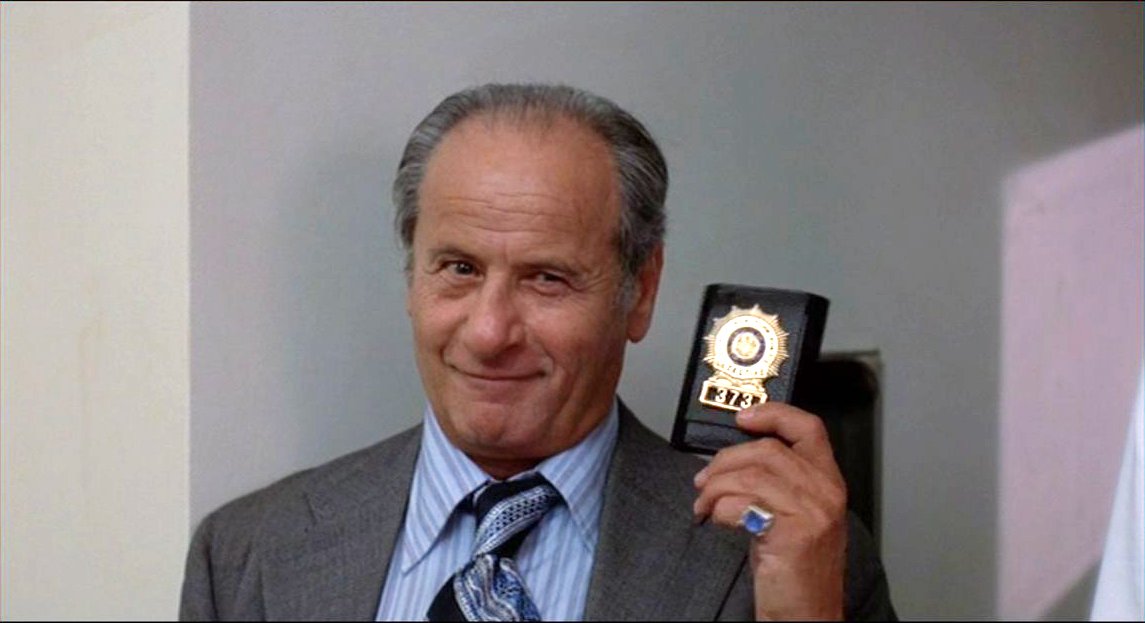
Eli Wallach as Detective Gatz
Burgess Meredith as Charles Chazen
What am I saying? I was stoked! I got the book from the library and positively raced through it, the cliché “I couldn't put it down!” a most apt description of how engrossing I found it. A novel so influenced by Rosemary’s Baby that it bordered on plagiarism, yet taking its overlay of then-trendy Catholic-based horror to effectively creepy and unexpected twists.
Meanwhile, the Hollywood trade papers ran items on an almost daily basis announcing which new star (Eli Wallach, Ava Gardner, Martin Balsam…) had just been signed to the film. A good book, a good cast, a high-profile director (Michael Winner of Death Wish, who, had I been familiar with his work at the time, would have given me pause)…I had the feeling that The Sentinel could be the post-Rosemary’s Baby Satanic thriller I’d been waiting for.
Like Rosemary’s Baby, The Sentinel is a story of a lapsed Catholic who comes to pay dearly for her loss of faith. The godless infidel in this case being beautiful New York model Alison Parker, a fragile, two-time suicide attempt with father issues and a sleazy, albeit caring, lawyer boyfriend with a shady past (Sarandon). Afraid of duplicating her mother’s unhappy life of emotional and financial dependence, Alison seeks to live on her own for a time before committing to marriage, her search leading to a picturesque riverfront Brooklyn Heights brownstone that is to die for...literally.
Contemporary audiences are apt to find The Sentinel’s most startling, gasp-inducing scene to be the one in which real estate agent Ava Gardner informs Raines that the outlandishly spacious, fully furnished apartment is available to her for only $400 a month! A detail so outlandish in relation to today's housing crunch that even after the story begins dropping hints that the building is built over the very entrance to Hell itself, I doubt if any modern viewer would find that bit of info to be a deal-breaker for such a bargain. More than likely it would only serve as a reason to take on more renters insurance. 
Predictably, it's the renting of the too-good-to-be-true apartment that seems to trigger all manner of maladies and calamities for Alison. The strange neighbors, the noises coming from the empty apartment above, the piercing migraines, the blackouts, the hallucinations. And just what is it with the blind priest on the top floor who sits all day at the window, seemingly watching all the events unfold? What does it all mean? 
Finding out the answers to these questions makes for devilishly good, often unpleasantly gross-out, entertainment. The Sentinel is nowhere near as accomplished as Rosemary’s Baby (indeed at times it’s downright amateurish) but it’s a nicely constructed, slightly old-fashioned thriller of considerable suspense and scares that veers agreeably back and forth between chilling and campy, depending on which scene and whose performance you’re watching.
Sylvia Miles and Beverly D'Angelo play Gerde and Sandra, a quirky lesbian couple residing in the mysterious brownstone. Thanks to Ms. Miles' questionable Swedish accent and D'Angelo's, shall I say, commitment to her craft, their scene has become something of a cult classic.

WHAT I LOVE ABOUT THIS FILM
It’s clear from the start that the makers of The Sentinel are shooting for an unholy union of Rosemary’s Baby's brand of sophisticated urban horror crossed with the graphic gross-outs of The Exorcist and The Omen. There’s the emotionally fragile heroine plagued with guilt over abandoning her faith; the ominous-looking apartment-house filled with elderly eccentrics; a disturbing, cryptic nightmare; the suggestion of a plot against our heroine that her shady boyfriend may or may not be involved in; and the heroine’s deteriorating mental and physical health. It’s all there…cloaked in a solemn portentousness worthy of a religious parable on sin and redemption. 
Alison  seeks the counsel of Monsignor Franchino (Arthur Kennedy)
In The Sentinel, the battle between good and evil is metaphorically evoked (and a good many plot points telegraphed) by the colors black and white. 

The Sentinel never quite comes together as a great horror film (the script is too weak and performances all over the map), but as your better-than-average, big-budget B-movie, it’s very much like one of those amusement park haunted house rides. You get scared, you jump, sometimes you have to cover your eyes, other times you laugh - but through it all there's a great great time to be had, provided you don't take any of it too seriously.
Photographer Jeff Goldblum offers assistance to a headache-plagued Cristina Raines while concerned friend and fellow model Deborah Raffin looks on.

Here's a tip for budding screenwriters: if you really want the audience to like and feel sorry for a character, don't make her a fashion model. We don't take models seriously. For starters, nobody considers what they do to be real work, secondly, deep down we're all slightly envious or resentful of their genetics-based charmed lives and therefore tend to harbor secret hopes that terrible fates befall them. However, I must add that scenes of beautiful, heavily made-up women suffering in high-fashion attire awfully entertaining, even if the pleasure derived from it leans a bit towards camp and unintentional laughs.
Top Model: Slightly slouching model Cristina Raines (who did indeed model in real-life)
like looks like she could benefit from a Tyra Banks outburst about her posture.  

PERFORMANCES
In the I Love Lucy episode titled “Ricky’s Screen Test,” it’s learned that the producers of Don Juan plan to cast a newcomer in the lead and build him into a star by surrounding him with big-name performers. Pretty much sounds like what they had in mind with the casting of the lovely but largely unknown Cristina Raines in her first major screen role. 
Raines possesses an overall impassive countenance, a somewhat flat speaking voice, and a very un-model-like way of walking and standing, yet in spite of all this, I found myself being totally won over by her in this movie. Aside from liking the whole preachy Catholic thing used as a basis for horror, Raines is the main reason I've seen The Sentinel so many times. I know that sounds strange given what I've just said, but in roles that require an actor to be the one upon whom an audience must invest its sympathies and identification, personal appeal and likability can often trump technique. Cristina Raines registers rather stronger in the scenes of her character's decline than she does in the film's earlier scenes, as such, she makes for an appealingly vulnerable protagonist in the war between good and evil. 
Top-billed Chris Sarandon followed his attention-getting supporting role in Dog Day Afternoon with two career-killing unsympathetic lead roles in two poorly-received motion pictures. He was a sweaty serial rapist in Lipstick, and in The Sentinel, he plays a corrupt lawyer with an unflattering '70s porn-stache that makes him look way too much like Paul Snider (of Dorothy Stratten/ Chippendales infamy). Sarandon has proven himself to be a wonderful character actor, but I'm afraid he makes for a stiff, blank, leading man.

THE STUFF OF FANTASY
Even more than I love seeing all those bell-bottomed jeans and '70s fashions; more than I love the New York locations; more than I love Gil Melle's ghoulishly symphonic scoreI really get a kick out of the roster of talent assembled for this movie.
Clockwise from top left: Arthur Kennedy, Ava Gardner, Martin Balsam,
Christopher Walken, Jose Ferrer, and John Carradine.
Clockwise from top left: Jeff Goldblum, Jerry Orbach (the original Billy Flynn in Chicago), Charles Kimbrough (Murphy Brown), Reid Shelton (the original Daddy Warbucks in Annie), Hank Garrett (Car 54, Where Are You?), and William Hickey (Prizzi's Honor).
That's Richard Dreyfuss in this brief street scene and Tom Berenger  makes an appearance in the film's epilogue

THE STUFF OF DREAMS NIGHTMARES
Every horror film worth its salt in the 1970s had a big setpiece moment. The Exorcist had projectile pea soup, and The Omen had that spectacular beheading. The big moment in The Sentinelnot exactly a surprise, as it was prominently featured in the paperback cover art and on the movie poster for the filmis the rising of the demons and denizens of hell. The gates of hell spill open and all of Satan's minions come forth to terrorize and unleash (more) evil into the world. It is a peak horror moment and everyone involved with making The Sentinel knew it was going to have to top The Omen and The Exorcist if it had any hope of doing similar business.  
What many people apparently knew but failed to let me in on at the time (there was some pre-release controversy that somehow got by me) was that director Michael Winner had decided to take a disturbing page from the harrowing conclusion of the 1932 cult horror film classic Freaks, and used people with genuine physical disabilities to portray the demons. 
To say this sequence is unsettling is a major understatement. It's creepy, it's gory, it's so weirdly grotesque it borders on the distasteful. To this day I still can't bring myself to watch it except through extremely close-knit fingers over my eyes. But one critic at the time made the very good point that audiences are just as likely to view these individuals with empathy instead of fear, undercutting the effectiveness of Winner's questionable creative decision. 
In 1979 I had an opportunity to speak briefly to Cristina Raines and asked her about this scene (I was working at a Honda dealership at the time and she came to pick up her car. My asking about The Sentinel must have struck her as totally random, but how could I let an opportunity like that go?). She relayed to me that the entire film was very difficult to shoot, but this sequence, in particular, was especially tough because Winner, intent on extracting genuine reactions from her, was prone to springing surprises on her. 
It appears that many of Raines' screams and shocked reactions are the real deal, owing to the fact that much of what we're seeing is something she is seeing for the first time, as well. Raines also said that the individuals hired for the finale sequence (I think she said it took a week) appeared to be enjoying their time as movie stars. While not privy to whether or not any of them felt exploited or were disdainful of Winner's desire to present them as fearful grotesques, she did tell me that they all formed a kind of fraternal clique and seemed to enjoy the attention and special treatment that came with making the film.  
With the horror genre currently in the hands of many filmmakers I'm not particularly fond of (Rob Zombie, Sam Raimi, Eli Roth...the inauspicious list goes on....all of whom make Michael Winner look like Alfred Hitchcock), and favorites like Roman Polanski, David Cronenberg, and Brian De Palma all in their 70s and beyond; I've more or less put an end to my search to find a horror film as flawless as Rosemary's Baby. And maybe that's how it should be. Perfect is great, and you're lucky when you find it...but The Sentinel is a terrific reminder of how imperfection can sometimes be a lot of scary fun, too. 
"Blind? Well, then what does he look at?"

Copyright © Ken Anderson   2009 - 2013

Thursday, July 12, 2012

THE RITZ 1976

Three distinct memories spring to mind when I think of the movie version of The Ritz, Terrence McNally’s gay liberation-era Broadway farce that won Rita Moreno the 1975 Tony Award for Best Featured Actress in a Play: 
1) I was 18 years old and attending college in San Francisco when The Ritz had its West Coast premiere there. I recall the local papers running photos of Moreno posing on a special The Ritz cable car surrounded by a phalanx of attractive young men in tight-fitting “The Ritz” t-shirts, ready to be transported to the film’s screening, and later, if memory serves, to a disco after-party held at one of the city's more popular gay bathhouses. Movie premieres were rare in San Francisco, and everything about this one (disco-themed, gay-centric, hip, and a little kinky) encapsulated all the things I associate with that particular time and place.

2) The Ritz was released in the summer of 1976. America was caught up in Bicentennial and Olympics fever, and me...I was swept up in a fever of a different kind. One resulting from prolonged exposure to the pervasive and persuasive ad campaign for that other summer '76 release, The Omen ("You are one day closer to the end of the world!"). I went bonkers for that movie and saw The Omen at least four times that summer, never getting around to seeing The Ritz even once (although, in my defense, The Ritz performed so poorly that it was in theaters only a short time). 

3) Curiously, while I couldn't be troubled to see the film itself, I did make the effort to go to the theater where The Ritz was playing just so I could buy myself a "The Ritz" t-shirt. It was this very cool (for 1976, anyway) European-cut white shirt with the film’s title in black art-deco lettering on the front and Al Hirschfeld’s poster art caricatures of the film’s cast on the back. I absolutely loved that shirt!  It lasted all through college and survived for many years until finally disintegrating in the wash sometime in the mid-'80s.
Even the usually reliable Ebay has proved fruitless in searching for another one of these T-shirts. I knew I should have bought two of them when I had the chance back in 1976

When I finally got around to seeing The Ritz on cable TV in the late-'70s, I found I enjoyed it a great deal, and it instantly became one of my all-time favorites. I was so impressed with the attempt to create a kind of modern Marx Brothers comedy of chaos —a classic farce full of broadly pitched performances and McNally's irreverent send-ups of everything from homophobia to show business, gay culture to gangster films. 

The raw material is a great deal of outrageous good fun that could have perhaps benefited from that intangible, crazy "something" that Mel Brooks and Peter Bogdanovich brought to Young Frankenstein and What's Up, Doc?, respectively, but while The Ritz never reaches the heights of comic lunacy necessary to make this kind of comedy really soar, it nevertheless has a tremendously funny freneticism to it that throws new things at you so fast that even if you're not laughing, you're rarely, if ever, bored. 
Rita Moreno as Googie Gomez
Jack Weston as Gaetano Proclo
Jerry Stiller as Carmine Vespucci
Treat Williams as Michael Brick
F. Murray Abraham as Chris
Kaye Ballard as Vivian Proclo
One of the things that most struck me about seeing The Ritz for the first time, just a few short years after its initial release, was how swiftly it had become a period piece. Not in the superficial things like clothes and disco, but in reflecting an emerging liberalism that was already about to have the lid shut on it. In the intervening years since the glory days of the sexual revolution (the days of porno chic, Erica Jong, key clubs, wife-swapping, and Plato's Retreat lest we forget that sexual recklessness was not the sole province of gays in the '70s) fundamentalist nutjobs like Anita Bryant, the AIDS crisis, and the burgeoning conservatism of the '80s conspired to render The Ritz's pro-sex, pro-acceptance, live-and-let-live egalitarianism something for the history books.

I always regret that I didn't first see The Ritz back when the climate of the times better reflected the optimistic spirit of healthy hedonism depicted on the screen. This out-and-proud retooling of the classic bedroom farce was one of the earliest (if not the first) mainstream examples of gay sexuality presented as normal, fun, and every bit as prone to comical chaos and misunderstanding as heterosexual sex. Gay characters are introduced in a non-tragic, comic milieu where for once, the humor derives from their personalities. Being gay is merely a part of who they are, not the source of a joke. I can only think of a handful of films from that era (Saturday Night at the Baths, A Very Natural Thing, Some of My Best Friends Are) that successfully portrayed gay people in a gay-specific environment that was neither defined nor impacted by hetero acceptance or disapproval. 
The fictional  bathhouse in The Ritz is modeled on New York's The Continental Baths, the infamous '70s recreational sex venue that boasted a pool, gym, cafe, disco, and most popularly, a cabaret where stars like Bette Midler, Barry Manilow, and Peter Allen got their start 

Summarizing a farce's plot in print is thankless and the written equivalent of a tongue-twister: you know what you intend to say, but it often sounds garbled. But I’ll give it my best (and briefest): Cleveland sanitation company president Gaetano Proclo (Weston) has a hit put out on him by his mafia-connected brother-in-law (Stiller), and mistakenly picks a N.Y. gay bathhouse to hide out in. 
Hoping to just lay low for the duration, Proclo finds himself the unwitting target of an amorous chubby-chaser (Paul B. Price), a blackmail-minded private detective (Williams), and a monumentally untalented Puerto Rican cabaret singer (Moreno) who mistakes him for a producer. Of course, everything that can go wrong does, and complications escalate to a delightfully silly pitch, all leading to the anticipated chase/free-for-all finale. 
Taking place over the course of one frantic evening, The Ritz is a door-slamming, identity-mangling, towel-snapping, man-chasing, gun-wielding, lunatic comedy of absurdly subversive sexual politics. Behind all the hilarity is a nifty little commentary on how hard it is to pin labels on people when everyone’s dressed in only a towel.
Oscar-winner F. Murray Abraham (Amadeusleapfrogs over what could have been the unendurable cliches written into the character of Chris, a befuddled bathhouse regular swept up in a comic case of mistaken identity 

WHAT I LOVE ABOUT THIS FILM
Depending on the critic, the film legacy of director Richard Lester (A Hard Day’s Night, Petulia, The Three Musketeers) has been categorized as either varied or uneven. But that which has been most consistent in all of his work—a talent for brilliant bits of staged pandemonium—is well-suited to this screwball fish-out-of-water burlesque that mines traditionally uncomfortable gay/straight confrontations for laughs.
In comedy, all is forgiven if you just come through with the funny, and on that score, Lester, with just a few minor lags in pacing, succeeds in keeping things moving at the requisite frenetic pace. Lester's confident handling of the dizzying particulars of so many characters, doorways, and complications never gets in the way of his Broadway-trained cast (Moreno, Weston, Stiller, Abraham, and mustachioed chubby-chaser, Paul B. Price all reprise their stage roles), each of whom is allowed their moment to shine.
Devoted fat-fetishist Claude Perkins (Paul B. Price) puts the moves on a badly-disguised Gaetano Proclo (Jack Weston)
PERFORMANCES
Before talent-free, self-deluding, fame-whores became a staple of show-biz (thanks, reality TV), they were the deserving targets of satirical derision. After years of American Idol, Rita Moreno’s Puerto Rican bombshell, Googie Gomez, doesn’t seem nearly the awful performer she’s supposed to be (she sings only marginally worse than, say, Katy Perry), but the loony, comedic brilliance of Moreno’s performance hasn't waned a bit. Like the late Madeline Kahn, Moreno is an actress capable of being outrageous and natural at the same time. Fabulously sexy, Moreno imbues Googie with a comic lunacy that steals every scene she's in. 
Legend has it that Terrence McNally wrote The Ritz for Moreno after seeing her perform the character of Googie at parties. If so, the man should be commended for resisting the impulse to place this dynamically colorful character at the front and center of the play. As a peripheral but indispensable element of crazy in The Ritz’s party mix, she is the film's spice;  The Ritz offers just enough Googie ineptitudes, tantrums, and malaprops to leave you wanting more.
Googie Gomez launches into a grievously misguided rendition of "Everything's Coming Up Roses"

Every member of The Ritz’s gamely peripatetic ensemble cast is worthy of accolades (this film must have been a continuity nightmare), but Jack Weston is my personal favorite. A rubber-faced master of the double-take with all the corpulent grace of Oliver Hardy, Weston makes me laugh aloud time and time again over his incredulous reactions to the not-so-fine mess he’s gotten himself into.
Googie tries her hand at seduction

THE STUFF OF FANTASY
The Ritz is about as New York as you can get in terms of setting, subject, and humor, but was filmed, most likely for financial reasons, in the UK (the illusion is shattered less than a minute into the film when the actress cast as Jack Weston’s daughter delivers the line, “I want to go back to Cleveland” with a pronounced British lilt). What fascinates me about The Ritz is how British and Carry On-ish it all feels despite hewing so faithfully to the stage show and employing a largely Yankee. Director Richard Lester may be American by birth, but in having made England his home since 1956, I think he brings something to The Ritz that makes me wonder if perhaps there isn’t something to the widely held belief that there are really subtle and not-so-subtle differences between British and American humor.
In farce, all beds are made for hiding under, and situations are never as they seem
A curious thing about The Ritz, something that Kaye Ballard mentions in her memoirs, is that for a film set in a gay bathhouse, the movie is woefully low on male pulchritude. The Ritz has been cast with a straight male's detachment from (or fear of) his appreciation of male beauty. Lester found a way to include (in the burlesque tradition) a bevy of sexy females in 1966's A Funny Thing Happened on the Way to the Forum but clearly didn't think turnabout was fair play in this wholly appropriate male atmosphere. A peroxided Treat Williams (hilarious and endearing as the private eye with the helium voice and boyish nature) is pretty much it when it comes to beefcake.
"See something you like, buddy?"

THE STUFF OF DREAMS
Given that the heaviest topics can be lightened through levity, humor has always been one of the most pain-free ways to broach controversial subjects on film. With The Ritz, audiences otherwise loathe to spend 90 minutes watching a movie set in an environment as alien and potentially disconcerting as a gay bathhouse can galvanize around and have their latent homophobia assuaged by the more traditionally accessible comedy targets: sexism - the sexually rapacious heterosexual female; xenophobia - Googie's Puerto Rican assault on the English Language (I think Al Pacino studied Moreno her for his accent in Scarface); and irony - Googie's deluded belief in her own talent.
And if laughs are hard to elicit from viewers unsure of what to make out of a nonjudgmental look at an establishment where men gather to have anonymous, promiscuous sex with other men, then Gaetano Proclo’s exaggerated Alice Through The Looking Glass sense of bemused amazement provides the perfect outlet for all that nervous tension building up inside.
If, however, at film's end, audiences are left with their presumptions challenged, replaced with only the awareness that one has spent 90 minutes in the presence of a bunch of zany, eccentric characters, each unique and yet somehow the same...sympathetic, misunderstood, likable;...well, to me that's one small blow for the power of comedy.
Three Gay Caballeros
The Ritz is not perfect, but it IS a funny film, and there are more genuine laughs to be found here than in a great many more well-regarded comedies out there. It's a forgotten gem that has garnered a well-deserved cult following.  
The Ritz was revived on Broadway in 2007 for a limited run and featured Rosie Perez as Googie.

Copyright © Ken Anderson   2009 - 2012